
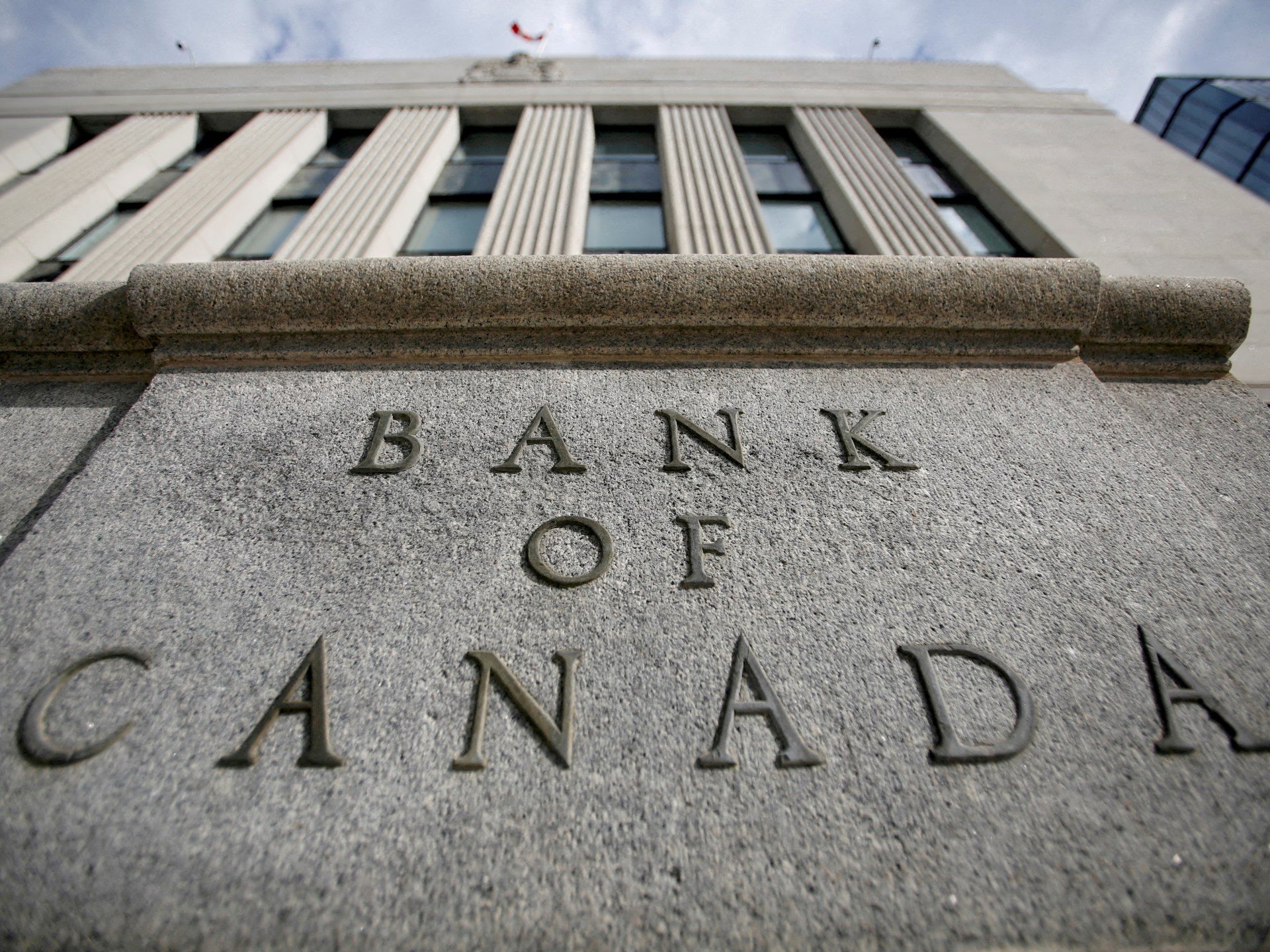

The Bank of Canada (BOC) has recently announced a reduction in its key policy interest rate, trimming it by 25 basis points to 3 percent. This development comes amid revised growth forecasts and cautionary warnings from Governor Tiff Macklem regarding the adverse economic consequences of a potential trade conflict with the United States.
In remarks delivered at a news conference, Macklem emphasized the seriousness of a prolonged trade war, stating that it could significantly impact economic activities across Canada. The uncertainty surrounding trade relations, particularly given the possibility of increased tariffs by the U.S., remains a formidable challenge for the Canadian economy.
U.S. President Donald Trump has indicated intentions to impose a substantial 25 percent tariff on all Canadian imports. Given that approximately 75 percent of Canada’s exports comprise goods and services bound for the U.S., the implications of such a tariff are alarming. Hypothetically, should Canada and various other nations implement retaliatory tariffs of the same magnitude, the BOC suggests that Canada’s growth could contract by 2.5 percentage points in the first year and an additional 1.5 percentage points in the subsequent year. However, officials have been quick to clarify that these figures represent a scenario rather than a definitive forecast.
Wednesday’s rate cut marks the sixth consecutive decrease in borrowing costs as the central bank grapples with sluggish economic growth despite inflation remaining within the bank’s target range of 1 to 3 percent. In a statement, the BOC noted that inflation is currently hovering around 2 percent, with the goal of stimulating activity in a landscape characterized by excess supply.
Following the announcement, the Canadian dollar saw a slight decline, dipping 0.3 percent to 1.44 against the U.S. dollar. Market analysts indicate that there is a notable probability—over 43 percent—of yet another 25-basis-point cut in the upcoming monetary policy meeting scheduled for March 12.
The intricate situation poses a dual challenge for the BOC, as the prospect of U.S. tariffs could potentially elevate inflation while simultaneously stifling growth. Macklem acknowledged the limitations of relying solely on the policy interest rate to navigate these opposing forces. He articulately conveyed that the central bank is prepared to help the economy adjust, particularly in light of current low inflation levels.
Significantly, the BOC has also announced an end to its quantitative tightening program in March, a measure previously aimed at withdrawing excess liquidity introduced during the pandemic. As the bank revised its economic growth outlook, it downgraded predictions for growth in 2025 from 2.1 percent to 1.8 percent and for 2026 from 2.3 percent to 1.8 percent. Furthermore, the central bank has adjusted inflation forecasts slightly upward, with projections now set at 2.3 percent for 2025 and 2.1 percent for 2026.
The data indicates that Canada has been experiencing a continuous per-capita economic contraction for the past six quarters, with recent growth primarily sustained by a rising population. However, with the federal government implementing new immigration restrictions, potential population declines of 0.2 percent are anticipated for both 2025 and 2026, which may further complicate economic recovery efforts.
In navigating this complex economic landscape, the Bank of Canada remains committed to balancing the demands of inflation control and economic growth, seeking pathways that would ultimately support the resilience of Canada’s economy.
#EconomicsNews #WorldNews