
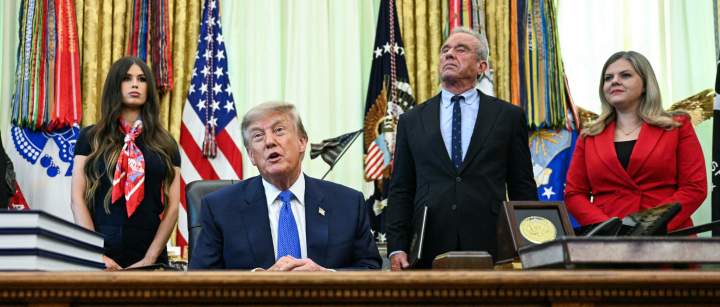

In a notable event on August 10, 2026, President Donald Trump, alongside Health and Human Services Secretary Robert F. Kennedy Jr., signed an executive order aimed at reforming the United States childhood vaccine schedule. While the order, titled “Gold Standard Childhood Vaccine Recommendations,” seeks to realign U.S. practices with those of peer nations, it has sparked a debate characterized by claims that some experts have deemed misleading.
The executive order proposes modifications that would reduce the number of diseases covered by the Northern American vaccine regimen from 17 to 11. This adjustment, officials argue, is a necessary step towards a more streamlined approach to vaccinations. However, past attempts to revise the vaccine schedule have encountered significant opposition, culminating in a court ruling that blocked similar measures after criticism from the American Academy of Pediatrics.
During the signing, Trump reiterated several assertions about childhood vaccines, including a misleading claim that the United States mandates an overwhelming 72 vaccinations for children. In reality, state requirements for school attendance do not come close to this number, and there are no federal mandates in place.
Experts have pointed out that there are sound medical reasons for vaccinating infants against diseases such as hepatitis B at birth, as this practice dramatically reduces the risks posed to this vulnerable population. Critics highlighted that Trump’s commentary often lacked scientific backing. For instance, his assertion that children are injected with “vats of vaccines” inaccurately exaggerates the volumes used during vaccinations. Typically, vaccine doses for children are minuscule, rarely exceeding one tenth of a teaspoon.
Trump’s connection of the rise in autism rates with the increasing number of vaccines has also faced strong criticism. Research consistently shows no causal relationship between vaccines and autism, a view supported by extensive reviews conducted by various scientific bodies. Experts emphasize that although autism diagnoses have increased, much of this rise can be attributed to improved awareness and changes in diagnostic criteria.
As the dust settles on this contentious executive order, experts remain skeptical about its legal underpinning and practical implications. Observers note that while vaccine recommendations evolve, the well-being of children remains paramount, and initiatives framed within the context of public health should be approached with caution and adhere to robust scientific evidence.
The future of vaccination policies in the U.S. remains uncertain, but the conversation reflects wider public interests in ensuring health standards align with best practices as informed by scientific advancements.
#HealthNews #PoliticsNews