
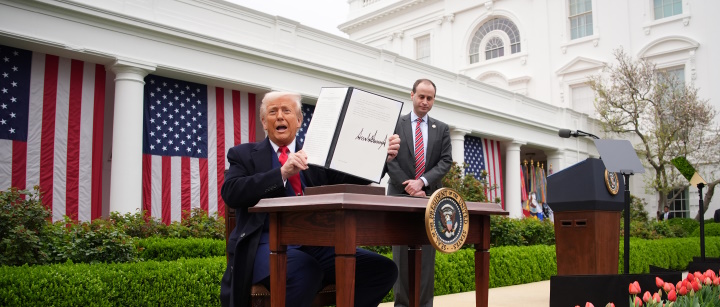

In a landscape marked by fluctuating economic policies, President Donald Trump’s administration has emphasized the role of increased tariffs as a means to fund several ambitious initiatives. Recently, Trump articulated that tariff-generated revenues would support multiple projects, including enhancements to the national defense budget, financial dividends for American citizens, and efforts to address the national debt. However, recent analyses suggest that the funds currently raised fall significantly short of meeting these extensive proposals.
According to the Treasury Department, the United States amassed approximately 4 billion from tariffs within a year of implementing new trade policies. This figure represents a substantial increase compared to previous periods, yet it cannot sufficiently fund all proposed initiatives. Specifically, projections indicate that the expenses associated with increasing the defense budget and providing dividend checks could require several years of revenue collection at current tariff rates to adequately cover even a portion of the expected costs.
Economists, including Erica York from the Tax Foundation, have expressed concerns regarding the sustainability of funding through tariffs. While acknowledging that tariffs do augment federal revenue, they also highlight that existing revenue is not adequate to meet the broad financial commitments outlined by the President. In fact, analyses from the Congressional Budget Office (CBO) predict average annual revenues of about 0 billion over the next decade; however, these figures are unlikely to suffice for Trump’s multi-trillion dollar initiatives.
Further complicating the situation is the inconsistent narrative concerning tariff policy and its intended outcomes. The President has asserted that tariff revenues could play a transformative role in the economy, creating a scenario where the United States would not only reduce its national debt but also possibly replace income taxes altogether. This assertion, however, raises questions about the feasibility of such a transition, as current data suggest that tariffs contribute only a fraction of overall federal revenues.
Indeed, while tariffs may modestly bolster government income, reliance on them for long-term fiscal sustainability presents challenges. Critics argue that the high dependency on imports contradicts the administration’s goal of incentivizing domestic manufacturing.
Overall, the interplay between tariff revenues and federal spending highlights a complex economic dilemma. As the administration prepares for its upcoming budgetary discussions, the efficacy of relying on tariffs to fund critical initiatives remains a pivotal topic of debate. Comprehensive analysis and prioritization will be essential as the White House navigates these intricate financial waters.
#PoliticsNews #BusinessNews