
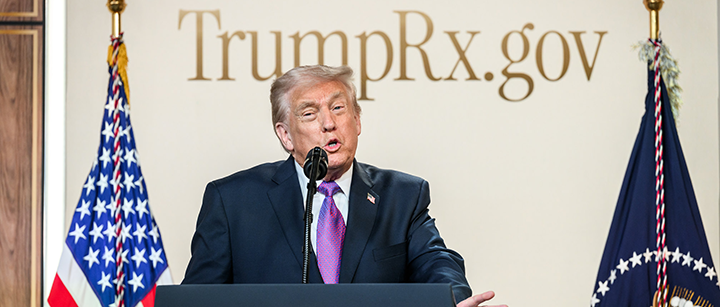

Recent data from the Bureau of Labor Statistics indicates that prescription drug prices in the United States have experienced a notable decline, with a reported decrease of 3.1% over the past year, marking the largest reduction seen in decades. This trend has led some officials, including former President Donald Trump, to attribute the decline primarily to initiatives like the online platform TrumpRx and negotiated agreements with pharmaceutical companies. However, experts in the field suggest that the causes behind this price drop are multifaceted and may not be directly linked to these programs.
The Trump administration has been quick to commend its efforts, particularly highlighting its “most-favored-nation” policy which aims to align drug prices in the U.S. with those in other developed nations. During a recent speech, Trump declared that the administration’s actions are providing the steepest reductions in drug pricing history. However, while such claims resonate politically, various health policy experts urge caution, arguing that market forces—including increased competition and the proliferation of generic drugs—are significantly influencing the current pricing landscape.
Cynthia Cox, a senior vice president with a respected health policy research organization, emphasized that both Republican and Democratic policies could contribute to the observed changes in pricing, but market pressures, especially regarding newer GLP-1 weight-loss drugs, play a major role. This sentiment is echoed by other experts who note that competitive dynamics in the drug market, alongside generics entering the sphere, have made a more substantial impact on prices than administration deals alone.
The TrumpRx platform, introduced earlier this year, offers discounts on select drugs for consumers paying out of pocket. While this may provide some cost savings for a subset of the population, analysts indicate that its overall market influence is likely to be limited. For the majority of Americans who use private insurance, most drugs available on TrumpRx are often cheaper through regular insurance plans or have even more affordable generic alternatives.
Despite the declining prices, experts caution that without clearer data on the extent and implementation of price negotiations, especially concerning the broad array of drugs on the market, it is challenging to measure the true impact of these agreements accurately. Proponents of Medicare negotiations, active under the Biden administration, argue that these initiatives can play a crucial role in reducing costs over time.
As drug pricing continues to be a pivotal issue, both politically and socially, the conversation remains dynamic. The interplay of various policies, market forces, and competition needs to be recognized to fully understand the future of prescription drug pricing in America.
#PoliticsNews #HealthNews