
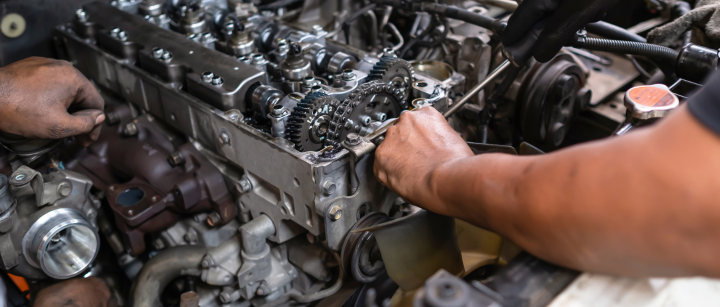

In a recent discourse on the critical “right to repair” issue affecting consumers in the automotive industry, President Donald Trump made controversial remarks that have garnered attention. Speaking at various events, including a roundtable in Chippewa Falls, Wisconsin, Trump reiterated an anecdote concerning the prosecution of a mechanic to illustrate his stance on consumer rights.
During his remarks, Trump claimed that a man served a lengthy prison sentence for repairing his own vehicle. He emphasized his disapproval of what he characterized as government overreach, stating, “They actually have, the Democrats, a restriction that if you get caught fixing your tractor, they bring you to jail.” Trump asserted that he pardoned a mechanic who had been sentenced to seven years for this infringement, raising eyebrows among experts and observers alike.
Investigations reveal that Trump appears to be referring to the case of Troy Lake, a Wyoming diesel mechanic. Lake had temporarily faced a one-year sentence for violating the Clean Air Act by disabling emissions systems on commercial trucks. He ultimately served only seven months of his sentence before receiving a pardon from Trump. While Lake argued that his actions were meant to assist struggling small businesses from exorbitant repair costs, he faced substantial legal repercussions for compromising emissions controls. It was noted that these actions could have significant consequences for air quality, resulting in an increase in vehicle emissions detrimental to public health and the environment.
The right to repair movement, which advocates for consumers’ ability to repair their personal devices and vehicles, has become increasingly contentious. The National Conference of State Legislatures describes this legislation as essential for empowering consumers to elect who services their vehicles without necessitating reliance on original manufacturers, a stance that resonates with many in the community.
As the debate unfolds, it is crucial to consider the implications of the right to repair, particularly for those in economically vulnerable positions, including small business owners. The automotive industry’s response to legislation surrounding this issue could redefine consumer rights and responsibilities moving forward.
The complexities surrounding the right to repair raise questions of manufacturer’s proprietary rights versus consumers’ ownership rights. As discussions continue, further engagement with all stakeholders remains essential to fostering a balanced approach that upholds environmental standards while empowering consumers.
#PoliticsNews #TechnologyNews