
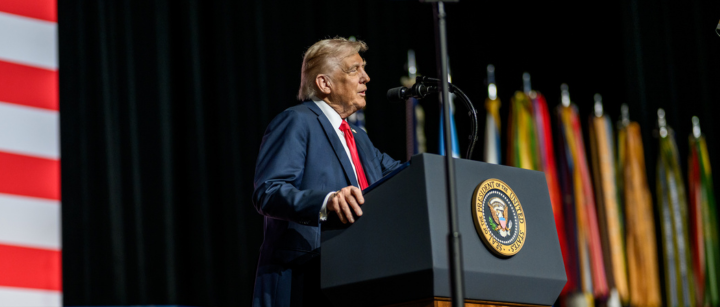

In a recent address to military leaders on September 30 and during a Cabinet meeting on October 9, former President Donald Trump made statements regarding military pay raises and recruitment that have drawn scrutiny.
Trump emphasized a proposed military pay increase of 3.8% for the upcoming year, suggesting this was a significant improvement over what he described as inadequate treatment by the previous administration. However, historical data reveals that military wages under his predecessor experienced increases of at least 4.5% in each of the three preceding years. Furthermore, pay raises for military personnel are determined by a legally mandated formula, leaving little room for individual discretion by the President.
In his remarks, Trump also claimed that military recruitment had faced significant challenges over the past year, asserting that “news stories” had reported difficulties in attracting new enlistees to the armed forces. Contradicting these assertions, data indicates that nearly all military branches successfully met their recruitment goals in fiscal year 2024, marking a recovery from the impacts of the COVID-19 pandemic.
Examining the specifics of military pay, the proposed 3.8% increase for 2026 is outlined in both the Senate and House versions of the National Defense Authorization Act (NDAA). The NDAA serves as a crucial framework for the Department of Defense’s budgetary requests. Legislative procedures allow Congress to either approve or modify proposed figures for military compensation, ensuring that the pay raises reflect changes in economic conditions as indicated by the Labor Department’s Employment Cost Index (ECI).
Amid these discussions, the Pentagon has reported a notable resurgence in recruitment efforts and outcomes. The Army, Navy, Air Force, and Space Force collectively achieved their recruitment objectives ahead of schedule this fiscal year. This uptick has been attributed to increasing national pride and a renewed sense of purpose among young Americans considering military service.
Despite Trump’s portrayal of the recruitment landscape, the reality is that military branches had begun meeting—and exceeding—their goals well before the election, showcasing resilience and adaptability in the face of challenging circumstances. As the landscape of military recruitment continues to evolve, the Department of Defense remains committed to refining its strategies, including educational initiatives aimed at improving the qualifications of potential recruits.
While Trump’s statements surrounding military pay and recruitment have raised questions regarding their accuracy and context, the overall narrative illustrates a committed and capable military force made up of dedicated individuals ready to serve their country.
#PoliticsNews #MilitaryNews