
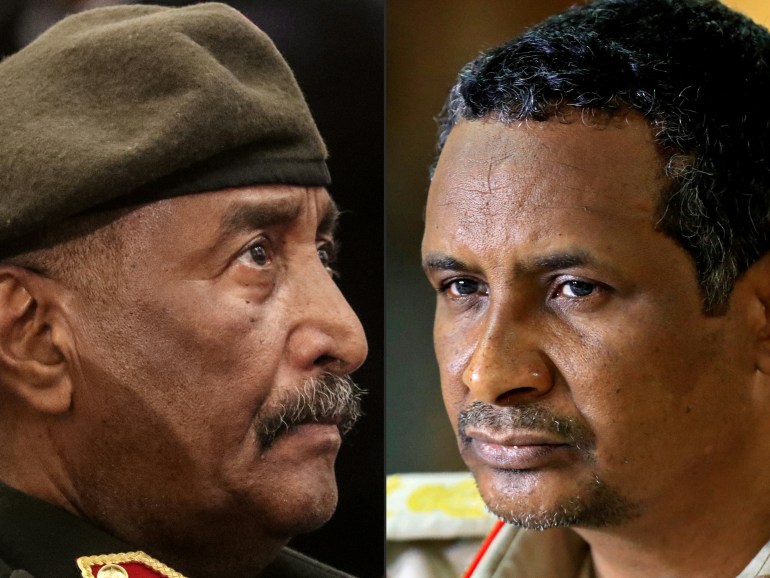

Recent developments in Sudan’s civil conflict are raising concerns over potential regional destabilization, notably involving neighboring South Sudan, as political analysts warn of an escalating crisis. The alignment between the Sudan People’s Liberation Movement-North (SPLM-N) and the paramilitary Rapid Support Forces (RSF) marks a significant shift in the conflict dynamics, following their cooperation established in February.
Since the onset of hostilities in April 2023, the RSF has engaged in a struggle against Sudan’s armed forces, seeking to assert control over strategic regions in central and eastern Sudan. At the helm of the SPLM-N is Abdel Aziz al-Hilu, a long-time adversary of the Sudanese government, who leads an armed movement with significant territorial influence in South Kordofan and Blue Nile states, both adjacent to South Sudan.
In a calculated response to this growing alliance, Sudan’s military has reportedly begun supporting South Sudanese militias to counteract the SPLM-N and RSF along their extensive shared border, which spans approximately 2,000 kilometers (1,240 miles). This response highlights the intricate connections and political ramifications within the region, particularly as South Sudan grapples with its own governance challenges that threaten to reignite its past civil unrest.
The strategic partnership between the SPLM-N and the RSF, while criticized by some observers due to the RSF’s controversial history, is seen by many experts as an essential maneuver for al-Hilu. Given the proximity of the RSF to his territory in South Kordofan, he faces the strategic necessity of consolidating forces in the face of multiple adversaries. As the RSF extends its reach, including recent territorial gains in West Kordofan, concerns grow over the potential for amplified conflict impacting not only Sudan but also South Sudan and beyond.
Historical patterns show that external influences, often through proxy forces, have played a pivotal role in the conflicts of both Sudan and South Sudan. In the past, Khartoum’s strategy involved undermining the SPLM by fostering division through the arming of various factions. Such tactics have long been employed as mechanisms of control, leading to centuries of complex inter-ethnic strife.
As tensions rise, particularly with the latest actions by South Sudanese President Salva Kiir to manage political opposition, the fragile balance in the region may be further jeopardized. Various factions, including those aligned with Vice President Riek Machar, are positioned within a constantly changing landscape where alliances can shift rapidly, and loyalties can transform in the face of escalating violence.
If the situation deteriorates in South Sudan, the implications could be profound, with many young men potentially becoming involved as mercenaries in the ongoing conflict in Sudan. The intertwining of these narratives highlights the perils of political fragmentation and the critical need for comprehensive dialogue and conflict resolution initiatives to mitigate the emergence of a larger regional crisis.
The evolving strategic dynamics in Sudan and South Sudan underscore the intersection of local politics and broader geopolitical interests, suggesting the need for active engagement from regional and international actors to foster stability in this tumultuous landscape.
#MiddleEastNews #AfricaNews