
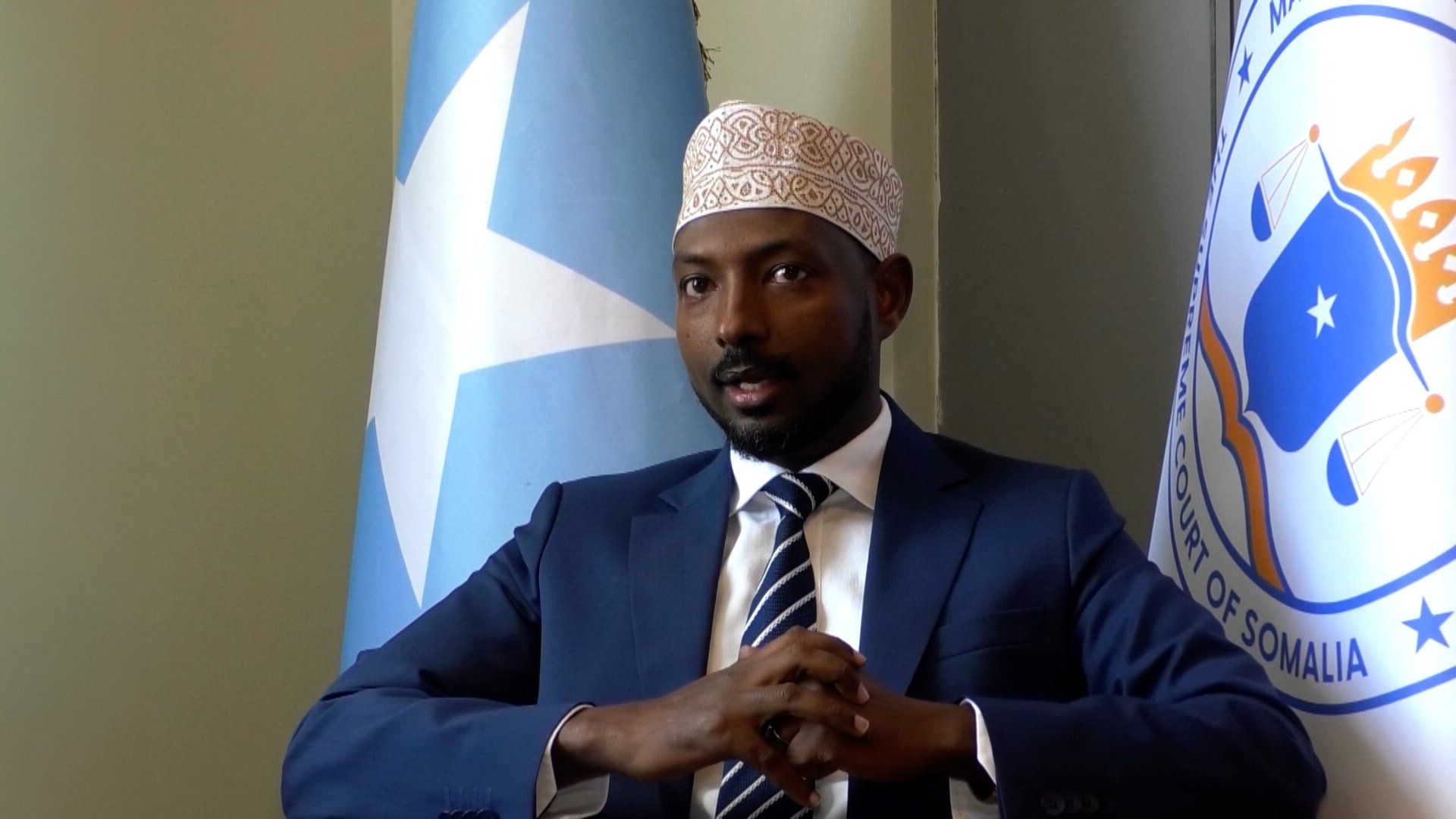

In a dramatic turn of events in Somalia, the country’s Supreme Court has become the focal point of a power struggle following a ruling declaring President Hassan Sheikh Mohamud’s term extension unconstitutional. This ruling has reportedly led to the occupation of the court by security forces, raising serious concerns about the independence of Somalia’s judiciary during a critical time in its political transition. The governance landscape in Somalia reflects broader struggles for democratic integrity and rule of law in the region, highlighting the ongoing challenges faced by nations in establishing stable democratic frameworks.
Former Chief Justice Bashe Yusuf Ahmed has claimed that over 300 security personnel have forcibly occupied the Supreme Court, following its decisive ruling against the constitutionality of President Hassan Sheikh Mohamud’s extended term. This occupation raises significant questions about the separation of powers in a country already grappling with issues of governance and stability.
Ahmed, speaking to ZezapTV, denounced the actions of the security forces, describing the situation as a direct violation of the court’s authority. The executive branch’s interference with judicial independence underscores the critical challenges faced by Somalia as it navigates a path toward democratic governance. As the country strives for effective leadership and a robust legal framework, maintaining the integrity of its judicial institutions is paramount.
While the situation continues to unfold, observers are calling for immediate action to restore the function of the courts and reaffirm the rule of law. The international community has expressed concern over these developments, highlighting the need for dialogue between the government and judicial authorities to ensure a resolution that upholds democratic principles.
In the broader context, Somalia’s experience reflects ongoing struggles across various nations to strengthen democratic institutions. The commitment to upholding judicial independence is vital not only for Somalia but also serves as a reminder of the global momentum toward enhancing governance structures that foster accountability and transparency.
As this situation evolves, the focus remains on the resilience of Somalia’s institutions and the possibility of restoring confidence in its legal and political systems. For many, the outcome will have implications that extend beyond national borders, signaling a hopeful or tumultuous chapter in the region’s ongoing quest for democratic reform.
#PoliticsNews #MiddleEastNews