
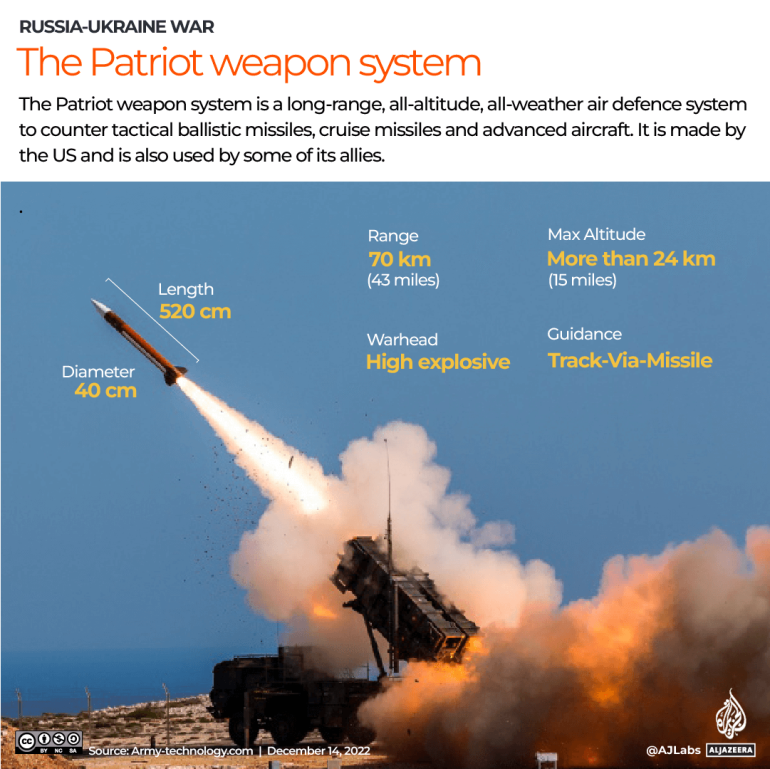

Amid the ongoing conflict that has engulfed Ukraine and exposed the frailties of modern military strategies, a noteworthy development has arisen concerning the supply and effectiveness of the US-made Patriot air defense systems. As these systems assist in thwarting missile and drone attacks, particularly from Iran, experts caution that Ukraine faces an impending ammunition crisis that could tilt the balance of aerial defense and result in dire consequences for its infrastructure. This situation serves as a reminder of the complexities of international defense dynamics, emphasizing the need for strategic solutions to address not only supply shortages but also the broader issues of combat preparedness.
Kyiv, Ukraine – As Washington’s Middle Eastern allies leverage US-made Patriot air defense systems to intercept Iranian missiles and drones, Ukraine now confronts a critical shortage of ammunition for these vital systems. Experts have warned that Russian President Vladimir Putin is likely to exploit this shortfall, aiming to deplete the expensive guided missiles that the truck-mounted Patriots launch at remarkable speeds to counter Russia’s ballistic missiles, previously hailed by Putin as “indestructible.”
The Patriots, originally developed in the 1970s to neutralize Soviet missiles, are still actively deployed in the ongoing conflict, having been supplied to Ukraine beginning in 2023. Initially stationed in Kyiv, the battery locations are frequently changed to shield them from Russian attacks. Nikolay Mitrokhin, a military expert at Germany’s Bremen University, noted that the Patriots have served as crucial defense elements, particularly for major urban areas, albeit with limitations on interception capabilities against all Russian missile types.
The impending ammunition shortage highlights a more profound issue within Ukraine’s defense strategy: the insufficient protection of critical infrastructure against Russian strikes. Mitrokhin asserted that Ukraine’s energy infrastructure could face inevitable devastation, irrespective of missile supply constraints, as systems like the Patriots cannot safeguard all key transmission lines from Russian assaults.
Ukrainian President Volodymyr Zelenskyy emphasized the urgency of the situation, noting that the country has never possessed sufficient missile stockpiles for defense against growing aerial threats. He is prepared to dispatch Ukrainian experts and drone interceptors to assist Gulf nations against their own missile challenges. However, this shortage is not an immediate crisis; as political analyst Volodymyr Fesenko stated, it is rather “tomorrow’s problem” that may escalate into a catastrophic scenario.
Currently, Moscow appears to have suspended aerial assaults, presumably to stockpile missiles for an upcoming significant attack against Ukraine. Fesenko warned that Russia’s strategy could involve exhausting Ukraine’s supply of Patriot missiles before launching widespread missile offensives.
Ukraine’s defenses are also impacted by a related missile shortage concerning Western-supplied F-16 fighter jets which have proven advantageous in downing Russian projectiles. Although this issue may not be as pressing as the Patriots’ situation, it remains critical.
The dilemma of missile supplies for Ukraine has arisen previously, particularly during summer 2023 when the US and Israel conducted strikes on Iranian nuclear sites, leading to a brief halt in Patriot deliveries due to inventory audits. This gap in supply left Ukrainian civilian infrastructure vulnerable to Russian attacks, exacerbating vulnerabilities already exposed by Moscow’s aggressive aerial strategies.
Russia’s tactics involve intricate assaults that combine numerous drone strikes to compel Ukrainian air defense forces to exhaust their missile inventory. Subsequent waves tend to bring more advanced ballistic and cruise missiles, raising the risk of significant damage across various civilian targets, not solely energy infrastructure.
In contrast, discussions surrounding the transfer of additional Patriot missile stocks from Israel and European nations remain tentative due to ongoing global instability. Analysts highlight the ongoing technological arms race between the US and Russia, as enhancements in Russian missile technology complicate Ukraine’s defense strategies.
Despite the limited number of Patriot batteries in Ukraine—currently fewer than a dozen—military experts contend that this defense system’s effectiveness in repelling Russian strikes remains crucial. As such, Ukraine is now turning to additional support in the form of the French-Italian SAMP/T systems, which have demonstrated efficiency in intercepting advanced threats.
Furthermore, Ukraine has increasingly intensified its own drone and missile operations deep within Russian territory, aiming to disrupt key military productions and command capabilities, which could mitigate some of Russia’s military advantages in the unfolding conflict. As the situation evolves, the potential for resilience amidst shortages and strategic adjustments will be critical in shaping the future of Ukraine’s defense efforts.
#WorldNews #MiddleEastNews