
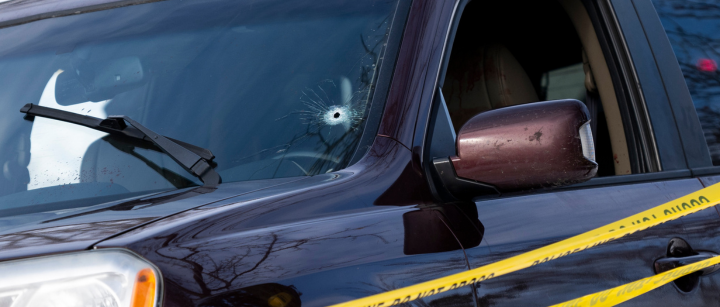

In the wake of the tragic shooting incident involving an Immigration and Customs Enforcement (ICE) agent that claimed the life of 37-year-old Renee Nicole Good in Minneapolis, contrasting narratives have emerged from political leaders regarding the events leading up to her death on January 7. This divergence underscores the complexities of interpreting video evidence, particularly when views are informed by differing political ideologies and personal experiences.
Shortly after the incident, President Donald Trump shared a video clip of the shooting, claiming that Good “violently, willfully, and viciously ran over the ICE Officer,” who was acting in self-defense. However, other footage, captured closer to the scene, appears to contradict this view, leaving questions about whether the vehicle even struck the officer. The capacity for observers to interpret the same footage in vastly different ways is a phenomenon that experts suggest is commonplace.
Department of Homeland Security Secretary Kristi Noem characterized the incident as an act of domestic terrorism, asserting that the ICE officer fired in defense, while Democratic leaders, including Minneapolis Mayor Jacob Frey, claimed that the use of force was reckless and unwarranted. Frey expressed strong disapproval of the narrative being shaped, stating that it was inappropriate to initiate a self-defense argument without comprehensive evidence.
This visible disagreement underscores the challenges faced by investigators. Experts in law enforcement and evidence analysis emphasize the need for a thorough examination of the incident, including witness interviews and forensic evidence that could shed light on the circumstances surrounding the shooting. The ongoing investigation, led solely by the FBI following initial collaborative efforts, aims to provide clarity amidst the conflicting viewpoints that have emerged from this tragic event.
Critical to understanding the incident is the concept of cognitive biases that impact viewer interpretations. Factors such as previous experiences and personal beliefs can heavily influence one’s perception of the same events. As law professor Seth W. Stoughton notes, individuals with different political alignment may naturally interpret the unfolding of the event through the lens of their ideological predispositions.
The case presents a significant challenge, as it raises pertinent questions about law enforcement’s use of force. Such incidents demand not only a detailed analysis of the actions taken but also an understanding of the thought processes of the individuals involved. The complexity of the situation emphasizes the necessity for careful, unbiased investigation and reflection on the policies guiding use-of-force protocols within law enforcement.
As the investigation continues, it is crucial for those following the developments to remain patient and recognize the importance of arriving at conclusions grounded in comprehensive, objective analysis rather than politically charged narratives. The outcome of this investigation will be pivotal in addressing critical questions around public safety and law enforcement transparency.
#PoliticsNews #MiddleEastNews