
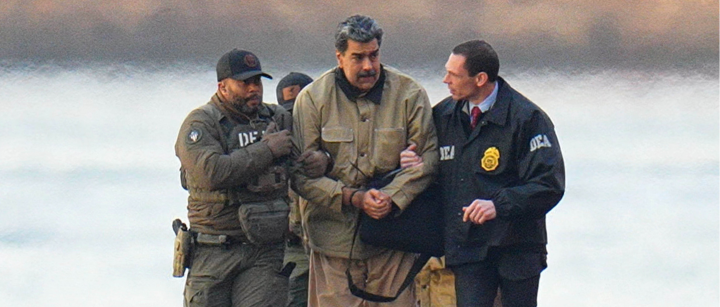

On January 3, 2026, actions taken by the Trump administration in Venezuela, resulting in the detention of President Nicolás Maduro and his wife, Cilia Flores, have ignited a substantial legal and political debate among lawmakers and international experts. Several Democratic representatives assert that the operation violated both domestic and international legal frameworks.
According to experts, the operation contravenes the United Nations Charter, which expressly forbids the use of military force by one nation against another without just cause. Historical interpretations of the U.S. Constitution indicate that congressional approval should be sought before engaging in military action abroad. Nonetheless, U.S. presidents, including Trump, have historically taken unilateral military actions without congressional oversight.
The assertion of illegality has been echoed by several Democrats. Representative Jim Himes, the ranking Democrat on the House Intelligence Committee, stated unequivocally that the military action was illegal under international law. Similarly, Representative Adam Smith likened the military operation to a blatant disregard for the established norms in international relations, pointing to the U.N. Charter’s prohibition against violating a nation’s sovereignty.
International law experts note that Article 2(4) of the U.N. Charter mandates that all member states must refrain from threatening or using force against the territorial integrity of any state. U.N. Secretary-General António Guterres has expressed concern regarding the lack of adherence to international legal standards, suggesting potential implications for global diplomatic relations.
Amid the critical discussion, Trump’s administration maintains that it acted within legal frameworks, citing a right to self-defense under Article 51 of the U.N. Charter. U.N. Ambassador Mike Waltz argued that the administration intervened to address perceived threats posed by Maduro’s regime, which they claim was linked to drug trafficking and terrorism.
The legal debates surrounding the military operation extend to discussions around congressional authority. Numerous Democrats argue that the administration acted unlawfully by not seeking prior congressional approval, as mandated by the War Powers Resolution. However, Republican lawmakers maintain that this specific operation did not require such authorization, emphasizing the need for immediate action against perceived threats.
The complexities of the situation illustrate the delicate balance between national security interests and adherence to international law. As the global community continues to grapple with issues of sovereignty and intervention, it remains vital to assess the implications of unilateral military actions on international relations.
This operation presents a crucial case for evaluating the limits of executive power in matters of national security. The ongoing debate underscores an essential tension within American politics regarding the appropriate roles of both Congress and the President in exercising military force abroad.
#MiddleEastNews #PoliticsNews