
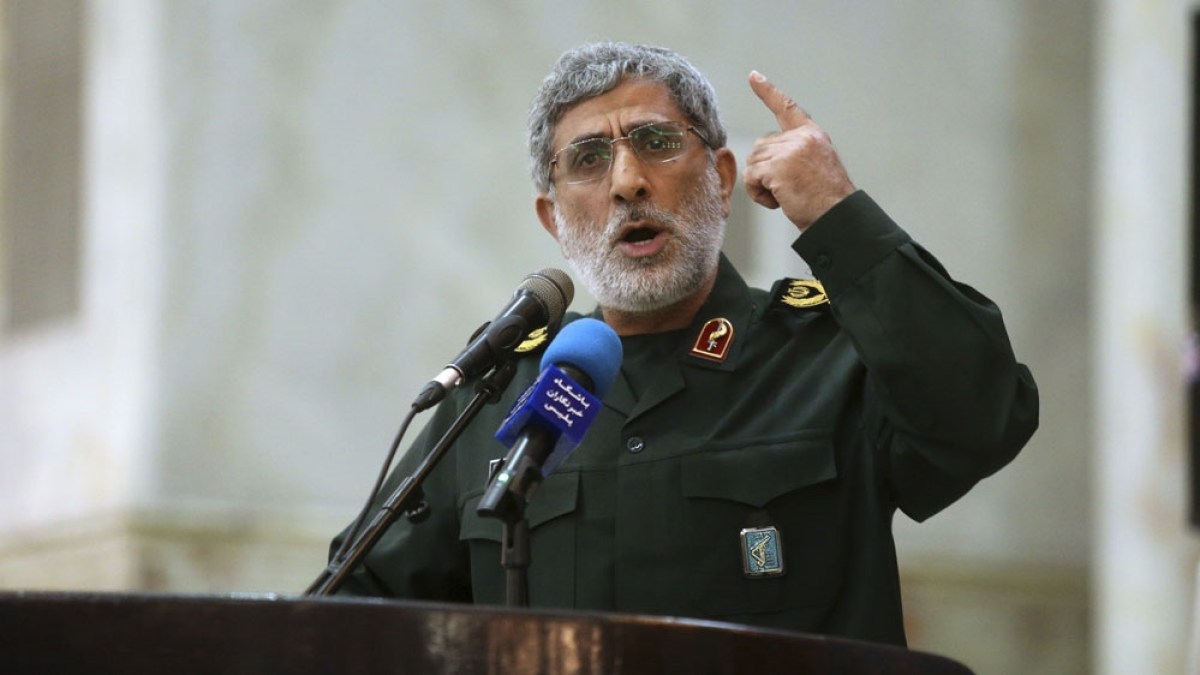

The evolving political landscape in Iraq presents both challenges and opportunities as the government strives to regain control over armed groups. In his recent visit, Esmail Qaani, the head of Iran’s Quds Force, engaged in critical discussions with Iraqi leaders regarding the disarmament of armed factions and the importance of fostering regional stability. This delicate balancing act underscores the complexity of Iraq’s security dynamics and the potential for collaborative solutions amid rising tensions.
Baghdad, Iraq – An Iraqi source from the Coordination Framework, which unites various Shia Iraqi parties, has disclosed that Esmail Qaani, the commander of the Islamic Revolutionary Guard Corps (IRGC) Quds Force, made an unannounced visit to Baghdad earlier this week. During this visit, Qaani held crucial meetings with Iraqi political and security leaders, as well as Shia paramilitary commanders, to discuss the Iraqi government’s strategy to disarm various armed groups and bring their arsenals under state authority.
According to the source, who requested anonymity, Qaani’s visit emphasized Tehran’s position against the immediate disarmament of these factions. It appears that Iran perceives the current climate as unstable, potentially leading to further conflict. The Iranian message underscored the importance of seeking political solutions rather than escalating confrontations with armed groups that refuse to relinquish their weapons. Notably, Iraqi political parties articulated their opposition to employing force in this disarmament effort.
As the deadline of September 30 approaches, Prime Minister Ali al-Zaidi faces increasing pressure amid a burgeoning political and security crisis. He has expressed commitment to uphold a 2024 agreement made with the U.S.-led coalition regarding the cessation of combat operations in Iraq by the month’s end. The government’s determination to centralize arms and disarm pro-Iran factions was central to al-Zaidi’s recent discussions both in the U.S. and during talks in Tehran with Iranian President Masoud Pezeshkian.
In a recent directive, al-Zaidi called on the parliament’s Security and Defence Committee to draft legislation aimed at consolidating weapons under state control, citing the unregulated possession of arms as a significant threat to national security and the rule of law. While several armed factions have agreed to amalgamate with the official armed forces, powerful groups such as Kataib Hezbollah and Harakat al-Nujaba remain unyielding, jeopardizing the government’s consolidation efforts.
Last week, the State Administration Coalition, which comprises prominent Shia, Sunni, and Kurdish parties, reiterated the imperative of regulating weapon ownership, branding unaffiliated armed entities as “outlaws.” The Coalition signaled the potential application of the “Anti-Terrorism Law” against any unauthorized armed action following the government-imposed deadline.
In the face of these challenges, some Shia leaders are working towards de-escalation. Prominent figures, including Ammar al-Hakim of the Hikma Movement, are championing dialogue and urging factions to comply with the government’s disarmament initiatives in the lead-up to the deadline.
From a broader perspective, Ghazi Faisal, head of the Iraqi Center for Strategic Studies, articulated that the ongoing possession of weapons by armed factions poses risks that could culminate in a regional security crisis. The potential use of Iraqi territory and military assets to target neighboring nations could provoke direct responses or necessitate the formation of new security coalitions, integrating these factions into a wider regional security dialogue.
Baghdad has recently experienced heightened tensions following threats from armed groups in response to a series of attacks by U.S. and Saudi forces against sites associated with the Popular Mobilization Forces. Despite these provocations, both the Iraqi government and various political factions have made strides in managing tensions, paving the way for diplomatic engagement and resolving conflicts.
This intricate interplay between local governance and regional dynamics illustrates the paramount significance of political negotiation and compromise in the pursuit of lasting stability in Iraq.
#PoliticsNews #MiddleEastNews