
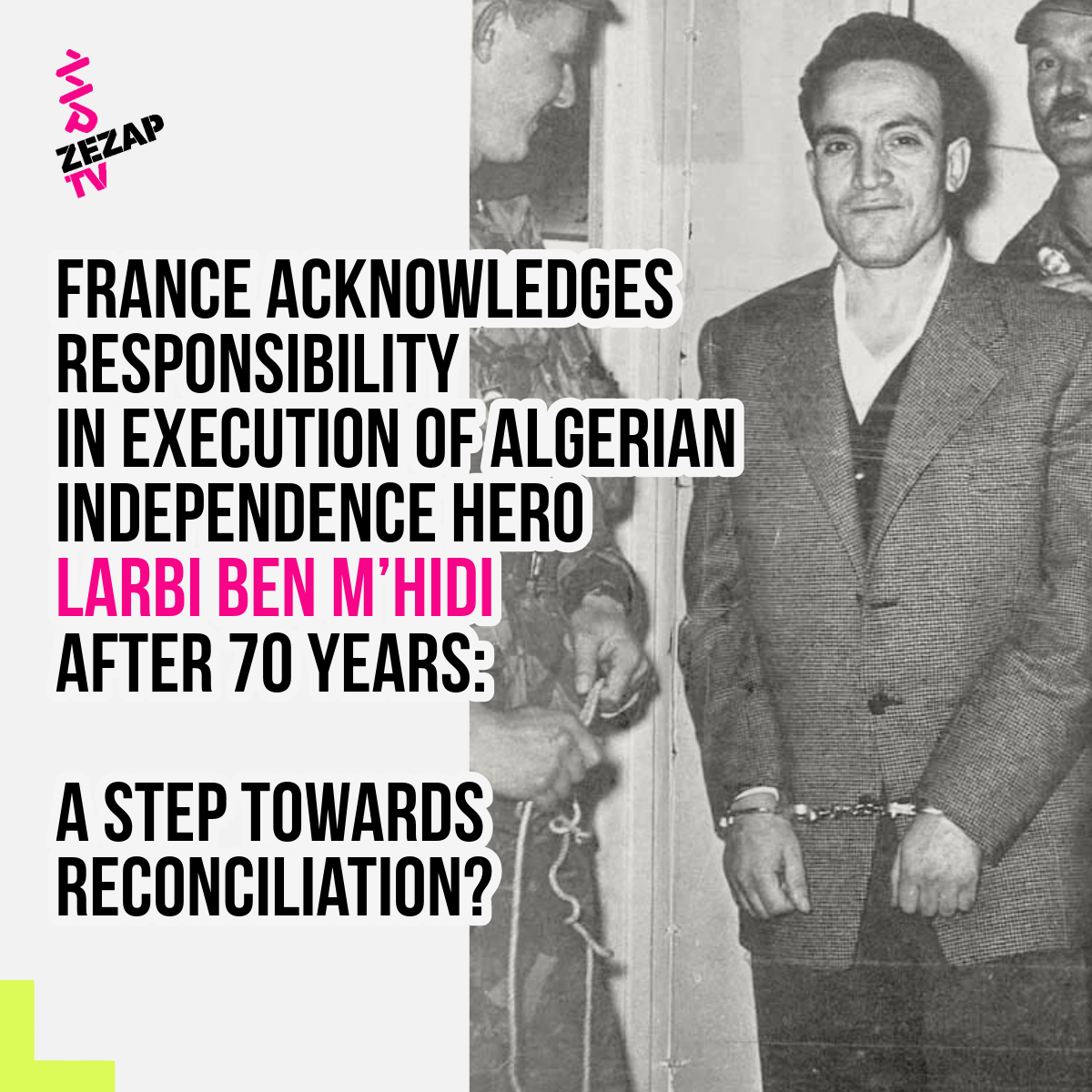

France Acknowledges Responsibility in Execution of Algerian Independence Hero Larbi Ben M’hidi After 70 Years: A Step Towards Reconciliation
In a historic acknowledgment, the French government has officially recognized its responsibility in the assassination of Larbi Ben M’hidi, one of Algeria’s most revered figures in the fight for independence. The statement, issued on November 1st to coincide with the 70th anniversary of the start of the Algerian War, marks a significant step towards addressing the painful legacy of France’s colonial past in Algeria.
Larbi Ben M’hidi, a key leader of the National Liberation Front (FLN), was a central figure in the movement that launched the insurrection against French colonial rule on November 1, 1954. He was captured in February 1957 by French military forces during the Battle of Algiers, a fierce crackdown on the independence movement. At the age of 34, M’hidi was tortured and executed while in custody, with French authorities initially attempting to cover up the act by claiming his death was a suicide.
It was not until 2001 that General Paul Aussaresses, a senior officer of the French military during the Algerian War, admitted to ordering and carrying out the hanging of M’hidi. This confession brought to light the brutal realities of France’s counter-insurgency tactics during the war, which were previously shrouded in secrecy. The acknowledgment from the French government now formally aligns with Aussaresses’ admission, coming over two decades after his confession and seven decades since M’hidi’s death.
Considered by many as the “Algerian Jean Moulin” — in reference to the renowned French Resistance hero during World War II — Larbi Ben M’hidi is a symbol of courage and sacrifice in Algeria. His unwavering commitment to the cause of independence and his tragic death made him an enduring martyr in the eyes of the Algerian people. M’hidi’s legacy has been immortalized in Algerian history, representing the resilience and resistance of a nation against colonial oppression.
In the recent communiqué, the Élysée expressed a desire to “seek ways for the reconciliation of memories between the two countries.” This gesture is seen as an important, albeit overdue, move towards mending the historical wounds inflicted during the brutal eight-year conflict that claimed hundreds of thousands of lives and left deep scars on both sides.
France’s acknowledgment comes at a time when both nations are exploring ways to improve their bilateral relationship, which remains complicated by the legacy of colonialism. The acknowledgment is also part of a broader effort by the French government to confront and take responsibility for the darker chapters of its colonial history. The move has been welcomed by many in Algeria, though some feel it is only the beginning of a longer journey towards justice and reconciliation.
The Algerian War of Independence, fought between 1954 and 1962, remains a deeply sensitive subject. The war saw widespread use of torture, mass internments, and brutal repression by French forces, which left lasting psychological scars on both Algerian fighters and civilians. For Algeria, the struggle for independence is a cornerstone of its national identity, with figures like Larbi Ben M’hidi serving as symbols of resistance and the sacrifices made for sovereignty.
While the acknowledgment of responsibility for M’hidi’s death is a meaningful gesture, many Algerians and historians have called for more concrete actions, including access to archives, official apologies, and reparations for the victims of colonial-era atrocities. The road to true reconciliation will require more than symbolic gestures — it will require open dialogue, historical transparency, and a shared commitment to healing.
For now, France’s recognition of its role in the execution of Larbi Ben M’hidi marks a crucial step towards confronting its colonial past. It is a step that opens the door to further reflection, dialogue, and the possibility of reconciliation between France and Algeria, two nations forever linked by a complex and painful history.