
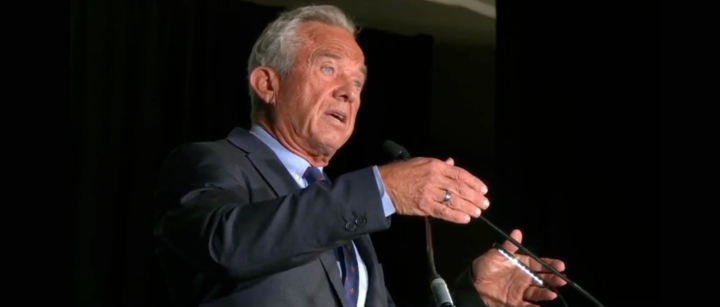

In a recent conference organized by Children’s Health Defense, Robert F. Kennedy Jr., who previously led the nonprofit known for its controversial stance on vaccines, voiced a series of claims about vaccine safety that have drawn significant scrutiny. Kennedy’s remarks echo longstanding narratives around vaccine hesitancy, emphasizing concerns many parents express about the health of their children.
Earlier in the year, Kennedy had curtailed his public statements regarding vaccines, reportedly at the behest of White House officials, amidst rising cases of diseases like measles, a serious public health concern. However, his re-emergence at the August event alongside former President Donald Trump reignited discussions on the subject. During this appearance, misleading assertions about the measles, mumps, and rubella (MMR) vaccine were made, with Trump characterizing it as “quite lethal,” and Kennedy suggesting there was emerging evidence to support the separation of the vaccine components.
The September 17 keynote speech highlighted Kennedy’s perspective on vaccines, during which he discussed a variety of alleged adverse effects associated with immunization. He argued that vaccines are inadequately tested and contribute to an observable increase in chronic health conditions in children. However, experts highlight that the conditions cited in vaccine package inserts do not conclusively establish a correlation with vaccines. The United States Department of Health and Human Services (HHS) clarifies that rigorous testing protocols are in place for every authorized or approved vaccine, which include scrutiny during clinical trials and ongoing safety monitoring post-approval.
Kennedy’s claims about vaccine-related health risks and misconduct in research methods have been met with rebuttals from several medical associations, including the American Academy of Pediatrics. These organizations continue to advocate for a balance of vaccine promotion while addressing parental concerns about pediatric health. The dialogue surrounding vaccination is certainly complex, particularly in light of increasing vaccine-preventable disease outbreaks in recent years.
In his speech, Kennedy also ventured ideas about topics like electromagnetic fields and so-called “chemtrails,” theories that have not found credible support within the scientific community. Nevertheless, his remarks seem to resonate with a segment of the audience that is eager to see a shift in how health decisions are made, reflecting a growing desire for transparency and accountability in public health.
As these conversations unfold, the importance of evidence-based science in healthcare decisions remains paramount. The interplay between parental concerns and expert recommendations is vital in fostering a comprehensive approach to public health and childhood wellness.
#HealthNews #PoliticsNews