
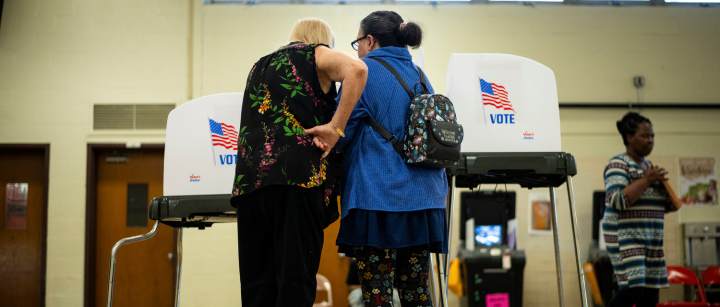

On March 17, the Senate initiated discussions on the SAVE America Act, a proposed legislation driven by Republican support aimed at establishing voter identification and registration requirements. This bill successfully passed through the House in February and has attracted substantial public interest, prompting inquiries regarding its implications and effectiveness.
Historically, previous iterations of this bill, known simply as the SAVE Act, failed to attract the necessary 60 votes in the Senate to overcome potential blockades. Similarly, the current wave of legislative efforts may encounter hurdles; nonetheless, Republican leaders have signaled intentions for an extensive debate throughout the week to rally broader support.
Prominent election expert David Becker, founder of the nonpartisan Center for Election Innovation & Research, expressed skepticism regarding the bill’s passage. He indicated that conversations may pivot to other topics soon after the debate period concludes.
Despite differing perspectives, advocates like Senate Majority Leader John Thune have characterized the SAVE America Act as a series of logical measures aimed at ensuring registered voters’ eligibility. Contrarily, Senate Minority Leader Chuck Schumer has described the proposal as a potential infringement on voting rights, suggesting it could disenfranchise many American citizens.
The legislation seeks to enhance the integrity of federal elections by preventing non-U.S. citizens from casting votes—a situation that expert analyses deem infrequent. A notable feature of this bill is its requirement for voters to provide photo identification prior to voting, whether in person or by mail. Additionally, states would be mandated to utilize a Department of Homeland Security verification process to validate the citizenship status of individuals on voter rolls.
Former President Donald Trump has also encouraged the inclusion of more stringent measures in the bill, including proposals to limit mail-in voting options.
Under the current framework, voters would only need to register again if their circumstances change, such as a change of address or name, and even then, only documentation proving citizenship would be necessary—a provision described in detail within the legislation.
Concerns surrounding the potential impact on women who have changed their names post-marriage or divorce have been raised. The bill stipulates that states must create processes to address any discrepancies in voter registration names.
The SAVE America Act is positioned as a significant step by its proponents to enhance electoral processes in the United States, igniting discussions on voter verification and accessibility. The evolving dynamics surrounding this legislation highlight a vital intersection of voting rights, identification requirements, and electoral integrity, reflecting an ongoing commitment to ensuring a transparent and fair democratic process.
#PoliticsNews #WorldNews