

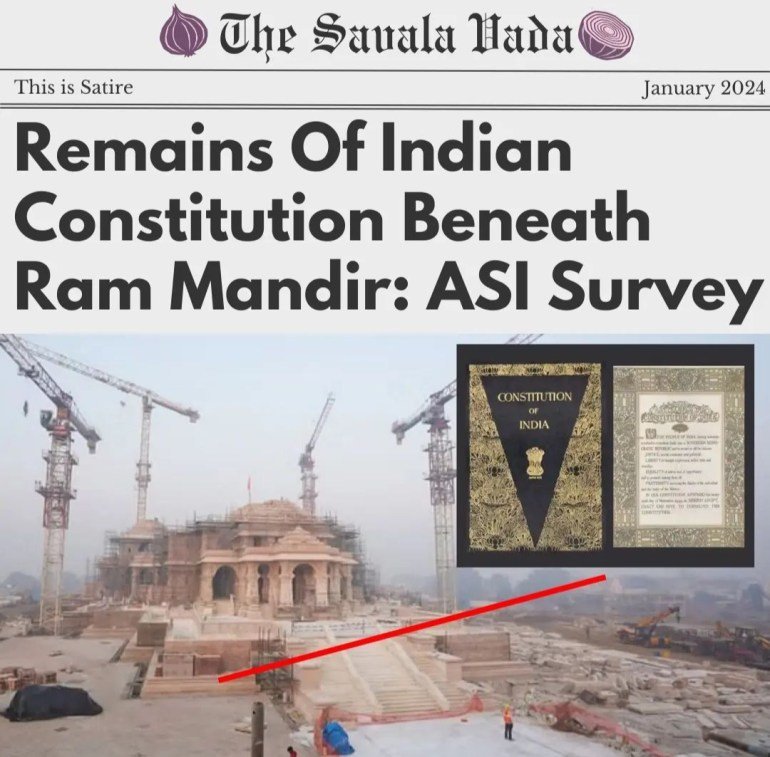
New Delhi, India – On January 22, 2024, during the inauguration of a highly discussed Hindu temple in Ayodhya, Indian Prime Minister Narendra Modi found himself in the spotlight while a student in Kerala, J*, prepared to express his views on social media. The 21-year-old humanities student, posting under his handle The Savala Vada, remarked, “Remains of Indian Constitution Beneath Ram Mandir: ASI Survey,” criticizing the prime minister for his perceived undermining of India’s secular foundations through the support of a temple built atop an ancient mosque site.
The Babri Mosque, a Mughal-era structure, was controversially demolished by Hindu extremists in 1992, setting off riots that tragically led to the deaths of over 2,000 individuals. This event significantly impacted Indian politics, with the Rashtriya Swayamsevak Sangh (RSS) and other Hindu groups asserting that the mosque occupied the birthplace of Ram, a revered figure in Hinduism. Following years of conflict, the Indian Supreme Court awarded the land to a trust favored by the government to construct the Ram temple, providing the Muslim community an alternative site for a new mosque.
The frenzy peaked when Modi laid the foundation stone for the temple earlier this year, a move seen as a strategic effort for electoral gains as he seeks a historic third term. J’s Instagram post, which went viral, faced backlash from nationalist supporters but also marked a significant growth in The Savala Vada’s following.
Operating behind the veil of anonymity due to safety concerns, J explained, “There is an entire ecosystem targeting dissenters.” He emphasized the importance of using humor as a vessel for truth in a landscape where satire can serve as a vital tool for expressing opposition to mainstream narratives dominated by powerful entities. The Savala Vada aims to create a democratic space characterized by humor and satire, reminiscent of the American satirical publication, The Onion.
Inspired by a diverse array of comedic influences ranging from George Carlin to John Oliver, J and his team ultimately transitioned their content to focus more on current affairs, reflecting a disillusionment with traditional media narratives, which they believe often favor the government’s agenda at the expense of marginalized communities.
In just over a year, The Savala Vada has amassed close to 69,000 followers and generated millions of views on its posts. Their content not only addresses local issues but also connects to global events, including commentary on the ongoing humanitarian crises in Gaza and the complex dynamics of Kasmir.
Despite the engagement and influence, The Savala Vada’s journey has not been without resistance. The team’s social media presence faced multiple challenges, including being temporarily banned and facing intimidation tactics from extreme nationalist groups. However, J remains unfazed, asserting the importance of using satire to highlight absurdities in contemporary society.
Amidst a backdrop of escalating censorship and declining press freedoms in India, The Savala Vada represents an innovative approach to storytelling that seeks to highlight the voices of the oppressed and counter dominant narratives with humor and critique. As the political landscape evolves, platforms like The Savala Vada continue to navigate risks while providing a fresh perspective on pressing issues, ultimately aspiring to foster democracy and inclusivity through laughter.
#CultureNews #PoliticsNews