
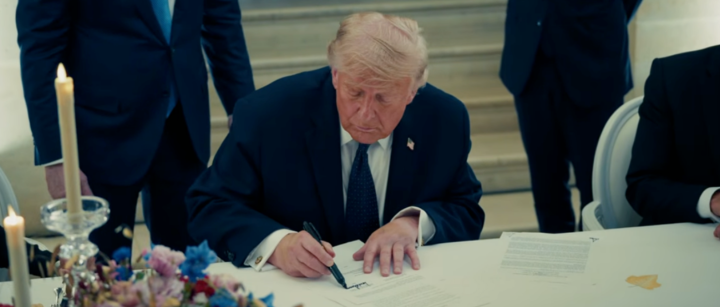

On June 17, President Donald Trump signed a preliminary memorandum of understanding (MoU) aimed at ceasing hostilities with Iran. This 14-point agreement establishes key terms for both nations and allows a 60-day negotiation period for further conditions. The initiative represents a significant step toward diplomatic engagement between the United States and Iran.
The MoU includes provisions that may diverge from the assurances Trump offered prior to its signing. During a recent interview, the President asserted that no Iranian assets would be unfrozen and no sanctions lifted initially. Contrarily, the agreement indicates that the U.S. Treasury Department will provide immediate waivers permitting Iran to resume its exports of crude oil and other petroleum products, potentially generating billions of dollars in revenue for the country.
Notably, the memorandum includes a mention of a USD 300 billion reconstruction fund for Iran, a detail the Trump administration initially dismissed as false. However, this funding, which has reportedly seen substantial commitments from private investors worldwide, aims to facilitate Iran’s economic revitalization post-conflict.
An essential point of contention in U.S.-Iran relations remains Iran’s nuclear program. While the agreement does not elaborate extensively on this issue, it does include language reaffirming Iran’s commitment to not develop nuclear weapons. This clause mirrors the previous Joint Comprehensive Plan of Action (JCPOA) framework, which sought to curb Iran’s nuclear ambitions through diplomatic engagement. The MoU proposes future discussions on sensitive topics related to the nuclear program, contingent upon mutual agreement.
In support of Iran’s rebuilding efforts, the agreement outlines intentions for comprehensive sanctions relief, committing the U.S. to lift various restrictions in a systematic manner. This could serve as a vital boost to Iran’s economy, particularly in the oil sector, where analysts predict it could generate up to billion annually if production resumes to pre-war levels.
The MoU indicates a shift towards finding constructive dialogues and solutions in the region, prioritizing negotiations over traditional constraints. As sensitively handled, such agreements can foster stability not only for Iran but also for neighboring regions, contributing to peace and resilience among communities.
With the framework now established, the challenge ahead will be adhering to the terms set forth and ensuring that negotiations yield positive outcomes. The commitment to mutual cooperation stands as a hopeful sign for all parties involved in this historical dialogues.
#WorldNews #MiddleEastNews