
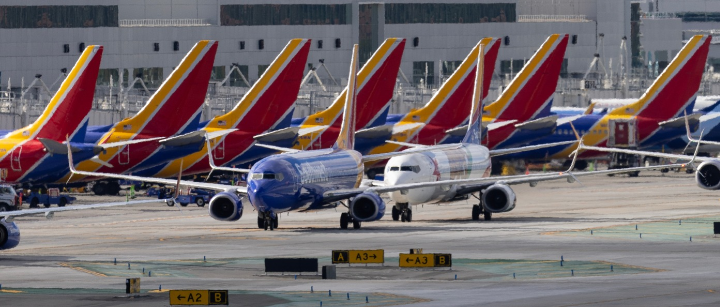

On November 13, the United States experienced a significant disruption in air travel, leading to the grounding of thousands of flights. This incident has sparked a heated debate about the underlying issues of the nation’s aging air traffic control system and has prompted political figures to assign blame across party lines.
Former President Donald Trump utilized social media to criticize the Biden administration, alleging that it has exacerbated flaws in an already outdated system. However, experts and reports indicate that challenges with the Federal Aviation Administration (FAA) date back multiple administrations and have been a persistent issue for decades. The modernizations needed for air traffic control infrastructure are long overdue and transcend partisan politics, involving decisions made by both Democrats and Republicans.
In response to the recent disruptions, Transportation Secretary Sean Duffy called for enhanced funding to revamp the air traffic control system. Congressional Democrats have raised eyebrows regarding Duffy’s request for additional resources, noting that his department has yet to expend a substantial portion of the .5 billion allocated for air traffic improvements in 2025. While this funding is designated for various upgrades through the 2029 fiscal year, progress has been slower than anticipated, raising questions about efficacy and accountability in implementation.
The recent ground stop has been connected to a technical malfunction at a communication site, resulting from ongoing efforts to upgrade outdated copper wiring to a more reliable fiber-optic system. Experts highlight that the need for careful planning and redundancy in upgrades is crucial, as the historical neglect of maintenance issues can lead to significant operational failures.
The effort to modernize the air traffic control system is not a new challenge; it traces back to the 1980s with the introduction of the Advanced Automation System and has been marred by delays and budget overruns. Subsequent initiatives, such as the Next Generation Air Transportation System, were launched by the FAA in 2003 with promises to modernize infrastructure, yet benefits have only marginally advanced over the past two decades.
Despite the partisan rhetoric, experts like John Strong of the College of William & Mary argue that while the system has faced strain, the most significant challenges have roots predating the Biden administration. Crucially, the Infrastructure Investment and Jobs Act of 2021 allocated billion for vital improvements, including infrastructure upgrades and staffing increases aimed at addressing controller shortages exacerbated by the COVID-19 pandemic.
The tussle over funding for air traffic control modernization continues as Secretary Duffy has proposed an ambitious billion investment to improve aviation infrastructure. Lawmakers remain skeptical, highlighting the need for effective utilization of current funds before approving additional allocations. This debate underscores the importance of a unified commitment to sustainable solutions that will enhance the safety and efficiency of America’s aviation system.
In a time of such critical infrastructure challenges, the calls for bipartisan cooperation and accountability in upgrading essential services resonate deeply across the nation, reinforcing the need for a revitalized focus on air travel reliability.
#PoliticsNews #WorldNews