
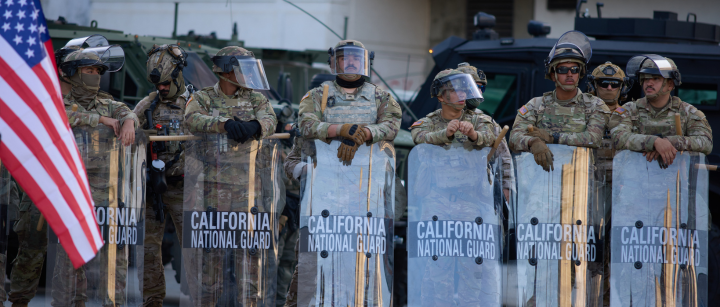

In a move that has sparked debate, President Donald Trump recently federalized the California National Guard, deploying troops to Los Angeles amid ongoing protests against his immigration policies. The decision comes in response to tensions exacerbated by increased deportations and heightened enforcement measures under the direction of White House officials, including Stephen Miller, a prominent architect of Trump’s immigration strategy.
Protests erupted in May 2025, driven by the administration’s push for aggressive immigration enforcement, which aimed to escalate daily arrests by Immigration and Customs Enforcement (ICE). On June 6, the situation intensified when ICE officers conducted a sweep targeting day laborers at a Home Depot in Los Angeles, prompting immediate protests across the city. Many community members rallied in response to what they deemed oppressive tactics that instill fear among immigrant communities.
California Governor Gavin Newsom asserted that local law enforcement had effectively managed the protests and criticized Trump’s deployment of troops as a politically charged move likely to escalate tensions. The governor has initiated legal actions questioning the constitutionality of the federalization, arguing that the president has overreached his authority by bypassing state control of the National Guard.
The legal battle is ongoing, with the courts being asked to weigh in on the president’s authority to deploy the National Guard. Legal experts note that while the president can call state National Guard units into federal service, such actions typically require consultation with state governors. The Trump administration maintains that interference from protesters constitutes a public safety crisis warranting federal intervention.
Following the federal deployment, reports indicate that around 2,100 National Guard troops and approximately 700 Marines have been authorized for duty in the Los Angeles region. The mission outlined by the federal government focuses on protecting federal personnel and property rather than directly engaging with protest activities. Observers note the restrictions placed on military personnel state they are not to take part in law enforcement operations, reflecting an intent to mitigate further escalation in community tensions.
Despite the heightened presence of military forces, there have been continued demonstrations, some of which have turned confrontational. Authorities reported over 200 arrests amid rising tensions, leading to the implementation of curfews in affected areas as a preventive measure.
The deployment of National Guard troops to Los Angeles has ignited discussions about federal versus state authority, community safety, and the impact of federal immigration policies on local populations. Advocates and officials continue to voice concerns that the militarization of immigration enforcement could provoke further unrest and mistrust within immigrant communities.
This complex situation underscores the ongoing tension between federal and state dynamics in immigration enforcement and the importance of finding equitable solutions that prioritize community safety and respect for civil rights.
#PoliticsNews #CultureNews