
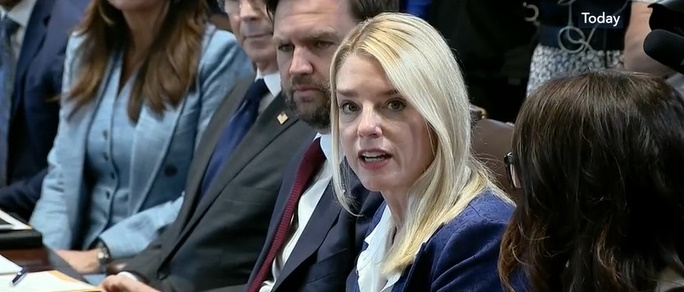

In a recent cabinet meeting on April 30, President Donald Trump’s administration discussed ongoing efforts to combat the opioid crisis, particularly the widespread issue of fentanyl. Attorney General Pam Bondi underscored the administration’s achievements during the president’s first 100 days in office, noting significant drug seizures designed to mitigate the impact of this potent synthetic opioid. However, her remarks raised eyebrows due to the exaggerated claim that these actions saved over 258 million lives, a statistic that suggests an astonishing number of Americans would have perished without these initiatives.
Bondi’s assertion stemmed from the Drug Enforcement Administration’s (DEA) report of seizing over 22 million fentanyl pills and 3,400 kilograms of the substance during the initial phase of Trump’s presidency. Though the Department of Justice (DOJ) calculates potential “deadly doses” based on the seized quantities, experts cautioned against interpreting these numbers as a direct representation of lives saved. The real U.S. population is approximately 342 million, leading analysts, including those at John Jay College of Criminal Justice, to question the sensational nature of Bondi’s claims.
Statistics released by the Centers for Disease Control and Prevention (CDC) indicate a promising trend: drug overdose deaths have been declining, with a reported 24% decrease for the fiscal year 2024 compared to the previous year. Most overdose deaths, which totaled around 87,000 in 2024, were attributed to synthetic opioids, a category that includes fentanyl. This shows the ongoing strides being made in addressing this public health crisis, although the numbers Bondi referenced were clearly an overestimation.
The method used by the DOJ to arrive at their staggering figures for lives saved involved estimates based strictly on the potential lethality of the seized fentanyl. While this methodology illustrates the dangers of synthetic opioids, it translates metrics into a dramatic narrative that lacks concrete evidence to support claims of lives saved.
The conversation surrounding fentanyl and drug policy is particularly relevant as it intersects with broader discussions about public health, law enforcement, and community safety. Continued work to curb the flow of fentanyl into the U.S. remains vital, while also acknowledging the complexities and nuances surrounding drug addiction and overdose rates.
Moving forward, it will be crucial for officials to maintain transparency and provide accurate information regarding drug seizures and their implications on public health, ensuring that rhetoric aligns with the realities faced by communities across the nation. As degradation from opioids remains a pressing concern, American leadership must engage with stakeholders on all fronts to foster an informed approach to combating this challenge.
#PoliticsNews #HealthNews