
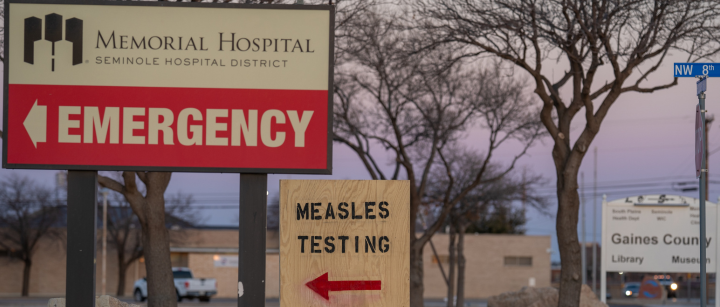

The ongoing measles outbreak in Texas has garnered significant attention as the state reports over 500 confirmed cases, leading to heightened concerns among health officials. Health and Human Services Secretary Robert F. Kennedy Jr. recently indicated that the outbreak’s growth may be slowing, citing efforts from the Centers for Disease Control and Prevention (CDC) team deployed in early March. However, a thorough analysis of state data contradicts this assertion, showing no observable decline in the number of new cases.
The outbreak has drawn public scrutiny, especially following the heartbreaking death of an unvaccinated 8-year-old from measles, which prompted Kennedy to address the situation during a visit to West Texas. He claimed that new case and hospitalization rates have flattened since the CDC’s intervention. This assertion, repeated in subsequent appearances in Phoenix and from various public statements, has not been supported by epidemiological data, which continues to reflect a steady increase in the outbreak.
Experts in pediatric infectious diseases, such as Dr. Andrew T. Pavia from the University of Utah, have critiqued Kennedy’s remarks, clarifying that they provide a misleading picture of the outbreak’s trajectory. Evidence suggests that the number of cases could be even higher than reported, due to underreporting and delayed testing. As critics emphasize, measles remains one of the most contagious viruses, posing significant risks to populations, particularly in areas with lower vaccination rates.
Texas currently finds itself in a precarious situation; nearly all reported cases are among unvaccinated individuals, emphasizing the need for public health advocacy concerning vaccinations. The Texas Department of State Health Services has noted that the majority of affected individuals have either unknown vaccination status or are unvaccinated, indicating a clear link between vaccination rates and disease transmission.
Looking ahead, public health officials warn that without significant changes in vaccination behavior, the Texas measles outbreak could perpetuate, with potential implications for surrounding regions. The scenario highlights the ongoing struggle against vaccine hesitancy, as misinformation continues to impact community health and safety.
With researchers and public health experts urging immediate action, it becomes ever more important to promote the benefits of vaccination. This situation serves as a critical reminder of the importance of vaccines in preventing outbreaks and protecting public health.
As the state continues to monitor the situation closely, it is imperative for families to consider vaccinations, particularly in outbreak areas. For public health to remain intact, community cooperation and awareness of vaccination strategies are essential.
In summary, while statements regarding the measles outbreak’s status are divisive, those in the medical community are unified in their stance that vaccination remains the key to controlling the disease.
#HealthNews #WorldNews