

Mozambique Prepares for Pivotal Elections Amid Calls for Change
Mozambicans are gearing up to participate in elections that may pave the way for the first president born after the country’s independence from Portuguese colonial rule in 1975. This historic vote takes place on Wednesday, featuring approximately 17 million eligible voters in a nation of 32 million. The elections will not only select a new president but also include simultaneous parliamentary and provincial elections across the nation’s 11 provinces.
President Filipe Nyusi, 65, representing the governing Mozambique Liberation Front (Frelimo) party, has opted not to seek re-election following eight years in office. His presidency has been marked by both substantial progress and significant challenges, including the notable “tuna bond” corruption scandal, which has seen several Frelimo leaders, including a former finance minister, face legal consequences for facilitating secret loans that benefited government-controlled fishing companies. This scandal has, however, paved the way for renewed calls for transparency and integrity within the political sphere.
As voters approach the polls, sentiments are divided. While many younger citizens express a desire for systemic change amidst rising unemployment and persistent poverty, older generations are more reticent about abandoning the established political order. The urgency for progress amplifies against a backdrop of increasing insecurity due to an ongoing armed conflict in the northern region of Cabo Delgado.
Who is Running?
Four candidates have officially entered the presidential race, each vying to win the hearts and minds of voters:
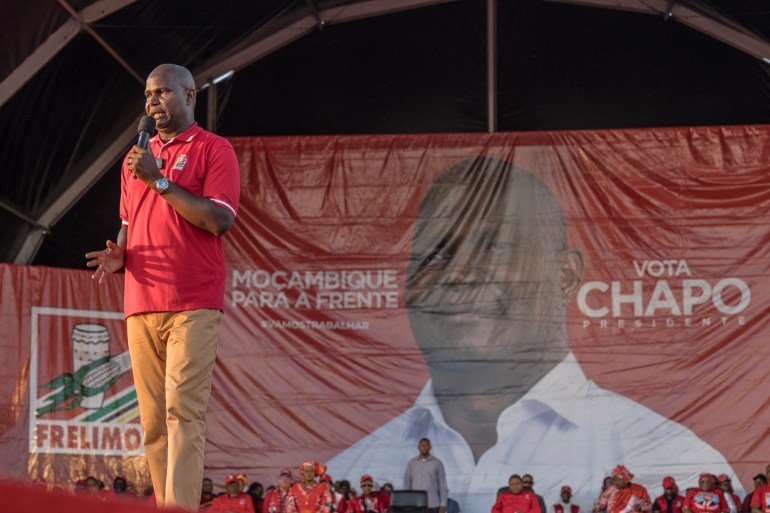
Daniel Chapo, 47
Chapo, an emerging politician and the Frelimo candidate, is seen as a strong contender due to the party’s incumbent advantages. Having joined politics in 2011 and subsequently rising to leadership within Frelimo, he is emphasizing his commitment to restoring peace in Cabo Delgado while distancing himself from Frelimo’s past controversies. His recent outreach to the large Mozambican diaspora in South Africa illustrates a strategic approach to broaden his support base.
Ossufo Momade, 63
As the leader of the opposition Mozambican National Resistance (Renamo), Momade leverages a legacy that includes signing peace accords that concluded the post-civil war conflict in 2019. While facing challenges from a fresh generation of leaders, his experience during Mozambique’s civil strife remains a source of resonance among his supporters.
Venancio Mondlane, 50
Mondlane’s independent candidacy, supported by a coalition of political groups, has struck a chord with younger voters eager for change. His focus on social issues, particularly job creation, aligns with the aspirations of the youth, who comprise a significant portion of the electorate.
Lutero Simango, 64
Leading the Democratic Movement of Mozambique (MDM), Simango is dedicated to enhancing economic opportunities for young Mozambicans by advocating for the local processing of natural resources. His vision for job creation underscores the pressing need for economic revitalization in the face of high unemployment rates.
Key Issues on the Agenda
Candidates are addressing three primary concerns that resonate with the public:
1. Armed Conflict in Cabo Delgado
The ongoing violence attributed to ISIL-linked groups poses a pressing threat, with thousands displaced and significant disruptions to local economies. As the conflict continues, voters are eager for actionable strategies to restore peace and security.
2. Job Creation and Economic Development
With two-thirds of Mozambique’s population under 25, the demand for job opportunities is urgent. Candidates recognize the necessity of utilizing the country’s rich natural resources to stimulate the economy and combat poverty exacerbated by historical corruption scandals.
3. Climate Resilience
Mozambique’s vulnerability to climate-related challenges has highlighted the need for resilient development strategies. Recent climate shocks have intensified hunger and food insecurity, further necessitating robust responses from political leaders.
Anticipating Election Results
Counting will commence immediately after polls close on Wednesday, with partial results released as available. The National Election Commission will provide official results within 15 days, allowing room for objections from contesting parties to be evaluated by the Constitutional Council, thereby ensuring transparency in the electoral process.
As Mozambique stands at a crossroads, this election is more than just a political event; it is a pivotal moment where the aspirations for change collide with the enduring legacies of the past. The outcome will significantly influence the country’s trajectory in the years to come.
#Politics #WorldNews