
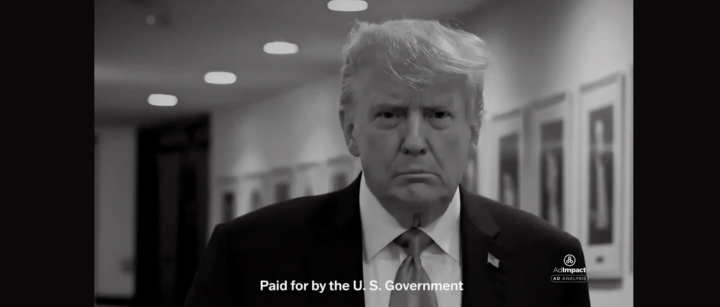

The White House has reaffirmed its stance on recent advertisements sponsored by taxpayer dollars that feature President Donald Trump, asserting their legitimacy by paralleling them with similar announcements from previous administrations. However, some legal experts are expressing concerns that these commercials may be politically charged, intended to shape public sentiment ahead of the 2026 midterm elections, and potentially infringing upon U.S. laws against the use of federal funds for propaganda.
In a press release dated September 25, the White House characterized the advertisements as “public service announcements,” contending that they do not promote a campaign nor feature Trump as a candidate. Instead, the administration emphasizes themes of national pride and the importance of American values, framing the messages as calls for patriotism in various contexts, both domestically and internationally.
In responding to critics, the White House noted that past administrations—both Republican and Democratic—have utilized similar public service campaigns to communicate policies and national objectives, highlighting examples from the administrations of George W. Bush, Barack Obama, and Joe Biden.
However, legal scholars have voiced skepticism regarding these comparisons. Richard Painter, a noted corporate law professor and former ethics attorney for George W. Bush, remarked that the Trump administration’s ads exhibit characteristics traditionally associated with propaganda, which is generally defined as state communications aimed at swaying public opinion.
John G. Geer, a political science professor at Vanderbilt University, noted that the distinctions between the Trump administration’s messaging and that of previous administrations are significant. He suggested that the current ads may be perceived as overtly political, raising questions about their compliance with existing laws governing election-related communications.
The content of the advertisements features striking visuals and strong statements from Trump, such as vows to combat communism and socialism, alongside endorsements from prominent figures including Dana White, CEO of UFC. Critics argue that references to antagonistic ideologies, especially in the context of upcoming elections, signal an attempt to galvanize Republican voter bases.
While the White House maintains that Trump is not on the ballot this election cycle, legal experts caution that these advertisements may influence public sentiment effectively, which could contravene the Hatch Act—a federal law designed to prevent government employees from using their official positions to impact elections.
The Federal Office of the General Counsel outlines potential repercussions for violations of the Hatch Act, including penalties ranging from suspension to civil fines. Additionally, the Government Accountability Office has previously established that misappropriation of federal funds for publicity could violate the Antideficiency Act, which has serious ramifications for federal accountability.
As this discourse unfolds, it is clear that the interplay between government messaging, public service announcements, and political campaigning remains a pivotal issue within the contemporary political landscape.
#PoliticsNews #WorldNews