
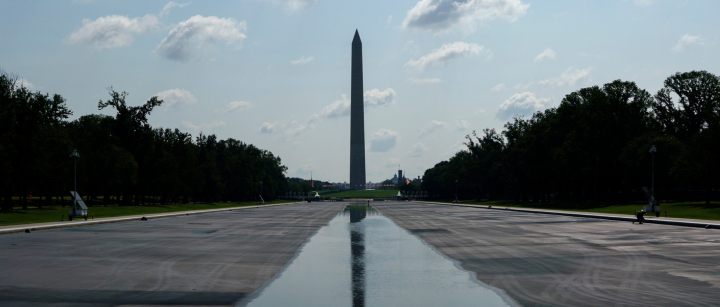

President Donald Trump has firmly maintained that the damage to the Lincoln Memorial Reflecting Pool is the result of vandalism, despite recent findings from a Department of Justice motion, which attributes the damage to a contractor’s improper installation of the pool’s liner. The situation has sparked a complex discourse surrounding accountability and the ongoing maintenance of national monuments.
In a motion filed by U.S. Attorney for the District of Columbia Jeanine Pirro, it was disclosed that the damage was likely caused by rushed and flawed installation practices by the contractor, rather than the intended view of vandalism initially suggested by the Department of Interior. The motion was part of a legal case concerning a felony charge against David Hearn, a former Olympic canoeist, who faced allegations related to the Reflecting Pool’s damage. Notably, it wasn’t until after Hearn’s indictment that the Department of Interior shared critical documents outlining the contractor’s errors.
Pirro’s scrutiny arose after a visual inspection revealed significant damage, prompting her to question prior assertions that nearly all the damage stemmed from malicious activities. She indicated that the Department of Interior had long been aware of the installation issues but had not disclosed this information sufficiently. Experts have pointed out that the peeling of the pool’s lining could reasonably be explained by application flaws rather than by vandalism.
Throughout this emerging narrative, Trump has expressed disagreement with the findings and described the incident as a deliberate act of vandalism, asserting that the evidence he presents, including videos purportedly showing individuals damaging the pool, supports his claims. Yet, ongoing investigations and inspections have raised doubts regarding the extent and nature of the alleged vandalism, emphasizing contractor negligence as a plausible cause of the issues faced.
Moreover, Pirro’s recent motion revealed that the rush to complete the project ahead of the America 250 celebrations—marking a significant moment in U.S. history—led to oversight and hurried work that contributed to the damage. The findings suggest that environmental conditions and testing failures during installation exacerbated the situation, further complicating the narrative surrounding this important national monument.
The damage to the Lincoln Memorial Reflecting Pool has opened up a broader conversation about heritage preservation and the responsibility of government agencies in ensuring maintenance and proper execution of public contracts. As investigations continue, the reflections on both the memorial and the surrounding discourse will likely shape public opinion on not just the incident itself, but also on how best to uphold the integrity of the nation’s historical sites.
#PoliticsNews #CultureNews