
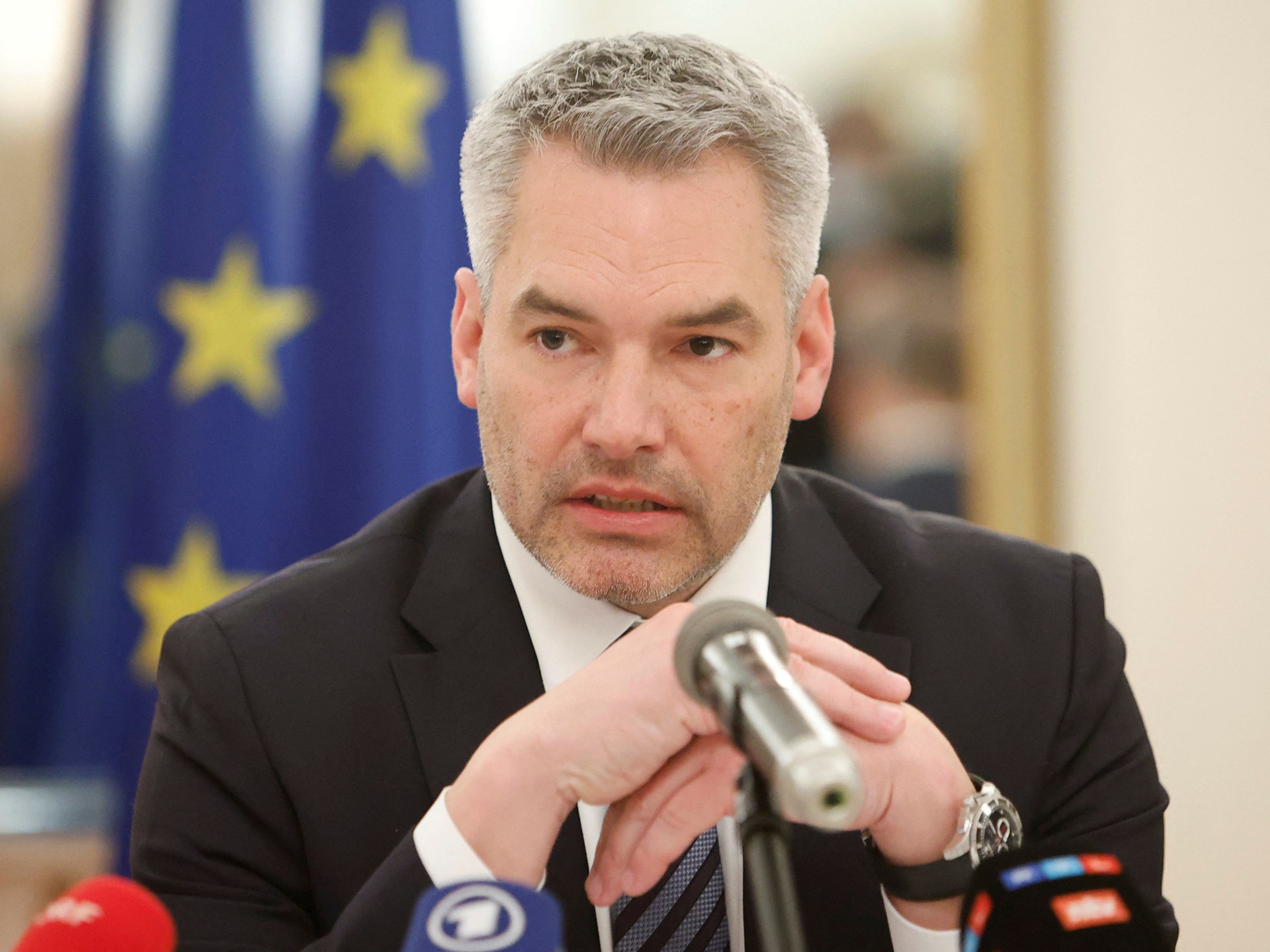

Austrian Chancellor Karl Nehammer has announced his intention to resign following the collapse of coalition talks aimed at forming a government without the participation of the far-right Freedom Party (FPO). This political development unfolds against the backdrop of increasing challenges faced in uniting the country’s major centrist parties.
The announcement, made on Saturday, follows the withdrawal of the liberal Neos party from negotiations that involved Nehammer’s conservative People’s Party (OVP) and the Social Democrats (SPO). In a video shared on his social media platforms, Nehammer stated, “After the breakoff of the coalition talks, I am going to do the following: I will step down both as chancellor and party chairman of the People’s Party in the coming days.” He noted that despite earnest dialogues, the negotiations ultimately failed, particularly in establishing consensus on strategies to counter the rising influence of the far right.
In his statement, Nehammer underscored his party’s commitment to prioritizing the economy and avoiding any new taxes that he believes would endanger economic stability. He also called for a process of “orderly transition,” directing his criticism towards “radicals who do not offer a single solution to any problem but only live from describing problems.”
The far-right Freedom Party, which gained significant political traction in the recent elections by securing nearly 30 percent of the vote, has become a contentious presence in Austrian politics. This has led to a hesitance among other political groups to collaborate in any coalition involving the eurosceptic and Russia-friendly FPO, under the leadership of Herbert Kickl. In late October, President Alexander Van der Bellen tasked Nehammer with the formidable challenge of forming a cohesive coalition in light of these dynamics.
Nehammer’s resignation introduces renewed uncertainty into the Austrian political landscape, as the OVP convenes to consider potential successors and navigate the complexities inherent in coalition governance. The pressing need for economic stability has become paramount, as the new government will face the daunting task of addressing a budget shortfall of between 18 to 24 billion euros, alongside rising unemployment and a recession that has characterized the past two years. The EU’s fiscal limit of 3 percent GDP also adds further pressure, reflecting the challenging economic environment within which this leadership transition will unfold.
As Austria navigates this transitional moment, the importance of strategic governance and coalition-building remains critical to addressing both current economic challenges and the larger political environment.
#PoliticsNews #WorldNews