
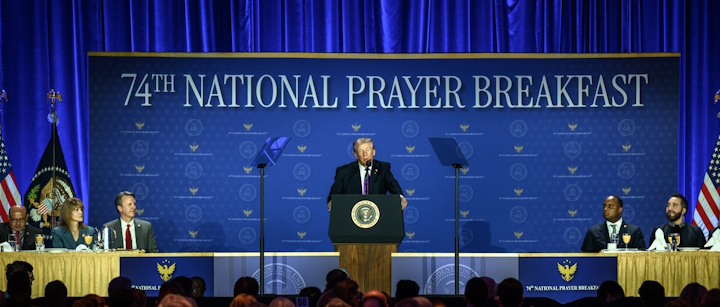

At a recent faith conference, former President Donald Trump proclaimed that “religion is back in our country, bigger and stronger than it has been in many, many years,” echoing sentiments he expressed during his earlier speeches, including his State of the Union address. Despite these optimistic assertions, recent surveys indicate a complex landscape regarding religious affiliation and engagement in the United States.
Multiple reports cast doubt on Trump’s assertions of a renewed commitment to faith, particularly among younger demographics. In a noted analysis, political scientist Ryan Burge highlighted survey data revealing a slight decline in the share of Americans identifying as nonreligious, decreasing from 34% in 2024 to 31% in 2025. This fluctuation represents the lowest level since 2016 and hints at changing tides within the religious landscape.
Furthermore, a study released by the Hartford Institute for Religion Research signified a rebound in attendance at religious services, surpassing pre-COVID-19 figures. The media spotlighted an increase in the median size of congregations, rising from a pre-pandemic median of 65 attendees to 70 in recent months. However, researchers urged caution in interpreting these results, as they note that attendance remains significantly lower than historical averages.
In stark contrast, Gallup’s polling data painted a different picture, showing that 47% of U.S. adults indicated that religion holds “very important” status in their lives, a decline from 51% during Trump’s initial presidential term. Additionally, nearly 24% of respondents reported having no religious affiliation—the highest percentage recorded.
Nevertheless, there are signs of potential growth within specific sectors of the population. Gallup recently surveyed young men aged 18 to 29, revealing a remarkable 14-point surge in the number who find religion “very important,” suggesting a renewed interest in spirituality among younger generations.
In terms of public perception, recent surveys show that a growing number of Americans believe that religion is gaining influence in public life; 37% affirmed this view compared to only 18% in February 2024. Interestingly, most respondents express a favorable view regarding the role of religion in society and view its influence as a positive development.
While the conversations surrounding faith and spirituality continue to evolve in America, a nuanced understanding of the data is essential. The juxtaposition of anecdotal claims against survey results underscores a fascinating period of introspection and potential redefinition of religious identity across demographics, particularly among the youth.
#CultureNews #OpinionNews