
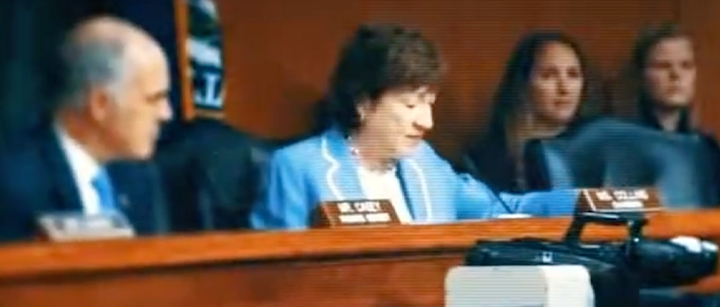

Senator Susan Collins, a Republican from Maine, faces renewed scrutiny regarding her stance on insider trading legislation, particularly in light of recent advertisements from Majority Forward, a pro-Democrat advocacy group. This organization alleges that Collins opposes making insider trading illegal for Congress members, a claim that has stirred debate in the political arena.
In 2012, Collins played a pivotal role in the passage of the Stop Trading on Congressional Knowledge (STOCK) Act, a law emphasizing that all members of Congress must adhere to insider trading rules and must disclose their investment activities more timely. However, Majority Forward’s advertisements suggest that Collins is actively working to preserve legislative privileges that would enable senators to profit from stock market transactions, a portrayal that detracts from her historical contributions to ethical governance in Congress.
Collins does not advocate for a total ban on stock trading by senators, instead favoring a policy where lawmakers’ portfolios are managed independently by outside advisors, thereby reducing potential conflicts of interest. While this approach has drawn criticism, it’s important to underscore her belief in the necessity of existing laws that prohibit insider trading, which she helped enact. Collins’ campaign emphasized that the assertion she believes insider trading should be legal is inaccurate, highlighting her authorship of legislation designed to prevent such unethical practices among elected officials.
The financial commitment to this advertisement campaign has been significant, with Majority Forward reportedly investing over 8,000 since June, as they work to influence perceptions ahead of Collins’ reelection bid. Despite the organization’s critique asserting that the original STOCK Act lacks effectiveness due to minimal enforcement measures, it reflects an ongoing dialogue on the integrity of lawmakers and the ethical limits of their financial dealings.
Overall, Collins maintains that existing legal frameworks ought to remain in force, and she believes that further tightening of regulations must be thoughtfully considered. This present controversy not only underscores the complexities involved in legislative finance but also indicates a broader public concern regarding transparency and accountability in Congress. As Americans continue to engage with these issues, support for candid discussions surrounding congressional ethics remains paramount.
#PoliticsNews #CultureNews