

Recent hostilities in the Middle East have intensified as Yemen’s Houthi rebels have launched their first ballistic missile attacks against Israel in light of ongoing regional conflicts involving Iran and Israel. This new front not only marks a significant escalation in hostilities but also reflects the increasingly complex geopolitical landscape as various factions engage in multifaceted warfare, reshaping the dynamics of the region and its global implications.
On March 28, 2026, Yemen’s Houthi rebels launched an unprecedented barrage of ballistic missiles targeting Israel, marking their first such strikes amidst the intensifying U.S.-Israeli conflict with Iran. Brigadier-General Yahya Saree, speaking on the Houthis’ Al-Masirah satellite channel, confirmed the missile strikes, stating that they would continue until the group’s objectives were met and aggression against resistance forces ceased. The Israeli military reported intercepting one missile during this exchange.
The missile attack occurred just hours after Saree signaled a decisive entry into the conflict that has significantly influenced the geopolitical climate and impacted the global economy. The Houthis claimed to have targeted crucial Israeli military installations in southern Israel, leading to air raid sirens across locations like Beer Sheba, as well as areas near Israel’s primary nuclear research center, amidst ongoing strikes from Iran and Hezbollah.
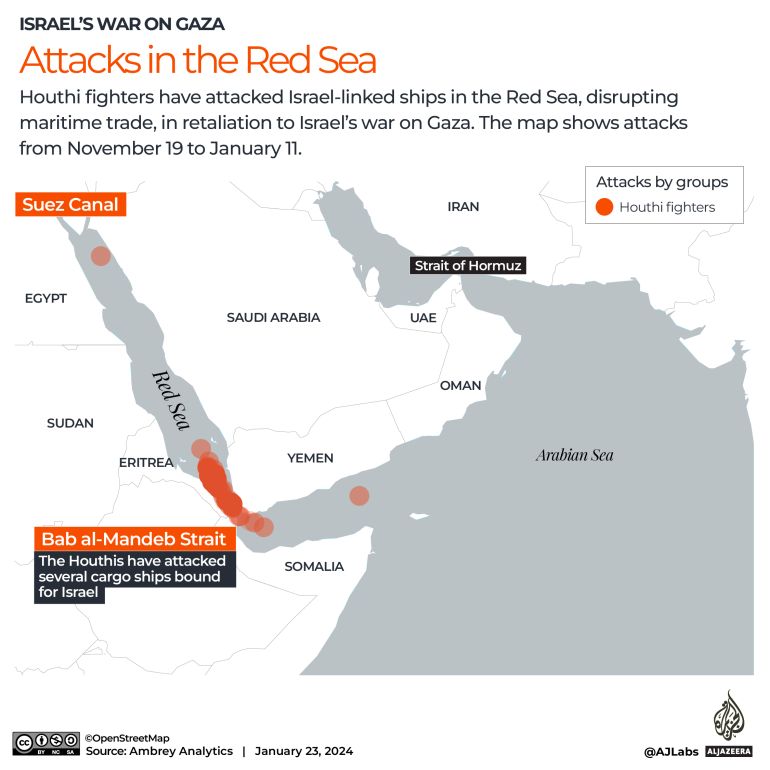
Since seizing control of Yemen’s capital, Sanaa, in 2014, the Houthis had maintained a relatively low profile in the U.S.-Israel confrontation. However, their past aggression, including attacks on commercial shipping during the Israel-Hamas conflict, had already disrupted trade routes in the Red Sea, affecting approximately trillion worth of goods annually. From late 2023 to early 2025, the Houthis targeted over 100 merchant vessels, resulting in the sinking of two ships and the loss of four sailors.
Mohamad Elmasry, a Media Studies professor at the Doha Institute for Graduate Studies, emphasized the significance of the Houthis’ involvement in this escalating war. He noted that their potential control over critical chokepoints like the Bab al-Mandab Strait and the Suez Canal could have far-reaching consequences for international trade and security.
According to Al Jazeera correspondent Nida Ibrahim, this newly opened front in the conflict is likely to raise pressing questions about Israel’s military strategy and decision-making in its ongoing military operations. Observers anticipate that Israel will retaliate against the Houthis, as it has done previously whenever Yemen escalated its involvement, viewing the Houthis’ actions as an expression of solidarity with the Palestinian cause.
As the situation unfolds, the international community watches closely, hoping for de-escalation in a region fraught with tension and conflict. #MiddleEastNews #WorldNews