
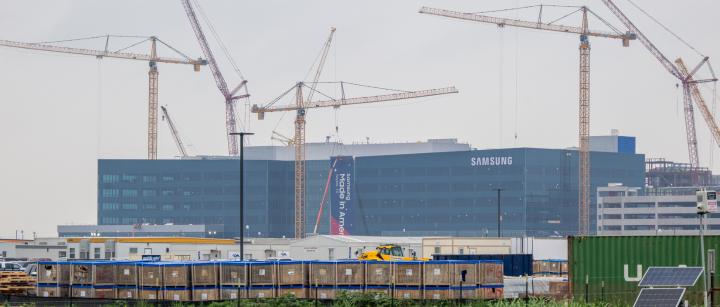

Manufacturing construction spending in the United States has undergone significant changes over the past several years, particularly in light of various government policies and economic conditions. According to data provided by the U.S. Census Bureau, a decline in investment aimed at building, expanding, and rehabilitating manufacturing sites has been noted since the Trump administration began. However, President Trump has consistently highlighted a reported 41% increase in factory construction as a marker of success.
During a White House press conference in January 2026, Trump asserted that investment in American factories had reached unprecedented levels. He characterized this 41% growth as “a record,” asserting that previous administrations could not replicate such figures. This narrative has been echoed in various settings, including his speech at the World Economic Forum, where he emphasized ongoing growth attributed to rapid approval processes for construction projects.
It is essential to contextualize these claims within the broader trajectory of manufacturing construction spending. Under President Joe Biden’s administration, which began in January 2021 and continued until January 2025, significant increases in manufacturing construction were observed. After a decline of 6.9% in 2020, spending on manufacturing construction experienced a robust recovery, with annual estimates indicating a more than 200% surge from .5 billion to 5.6 billion by 2024.
Biden’s administration benefited from strategic legislative measures such as the CHIPS Act, enacted to stimulate private investment in U.S. manufacturing for semiconductors and clean energy technologies. These investments have proven critical in reshoring manufacturing capabilities, particularly in high-demand sectors characterized by megaproject developments.
Census Bureau data indicate that spending in manufacturing construction surged between 2022 and 2024, with notably dramatic yearly increases: 62% in 2023 alone. Investment has since shown some signs of stabilization, though slight declines have been forecast for the subsequent years, with a dip of about 5% expected in 2025 and minor reductions through 2027.
Despite the overall annual declines mentioned, analysts note that semiconductor fabrication plants continue to be a driving force in manufacturing growth, suggesting a more promising long-term horizon. These expansive projects, although complex and time-intensive, are anticipated to yield substantial job creation and further economic benefits in the years to come.
The conversation around manufacturing in the U.S. continues to evolve, influenced by trade policies, economic strategies, and a globalized supply chain. While President Trump’s administration emphasized immediate metrics of success, the long-term ramifications of the Biden administration’s focus on sustainable growth through incentives and strategic investments are likely to shape the manufacturing landscape moving forward.
For those following developments in the manufacturing sector, accessing pertinent data from federal sources and large-scale industry reports will remain crucial as the industry navigates its pathway towards recovery and growth.
#BusinessNews #PoliticsNews