
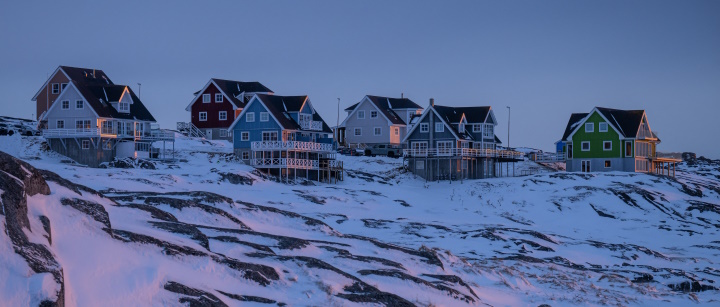

In a recent announcement at the World Economic Forum held in Davos, Switzerland, President Donald Trump heralded a new “framework of a future deal” regarding Greenland in collaboration with the Secretary General of NATO. Prior to this declaration, Trump had maintained that the acquisition of Greenland was critical for U.S. national security, making remarks that initially left open the possibility of using force for its acquisition. However, during his address at the forum, he clarified, emphasizing his intention to avoid militaristic measures.
Through his push for U.S. control over Greenland, Trump has raised several claims about the island—a territory home to approximately 56,000 residents—questioning Denmark’s ownership and asserting the need for U.S. sovereignty to adequately defend the region. It is essential to clarify that Denmark has maintained a historical claim over Greenland, solidified by the Treaty of Kiel in 1814, which was recognized by the Permanent Court of International Justice in 1933. These historical agreements and rulings lend credence to Denmark’s sovereign rights, with Greenland transitioning from a colony to a county within Denmark in 1953, subsequently receiving home rule in 1979.
Despite Trump’s assertions, the U.S. has long acknowledged Greenland as a territory of Denmark. In 1916, the U.S. declared it would not object to Denmark’s political and economic interests over Greenland. The defense of Greenland was also recognized in treaties during World War II and the subsequent establishment of NATO, revealing a longstanding cooperative military framework between the United States and Denmark.
The current U.S. military operations in Greenland are governed by agreements that do not require full ownership for strategic usage. Experts have pointed out that the existing military structures in place allow for significant operational capacity for the U.S. within Greenland, demonstrating a pragmatic approach without necessitating sovereignty over the territory. As recent Congressional reports have shown, the dynamics of military presence in the Arctic are evolving, with the increasing significance of the region amid global power tensions.
While discussions continue around the potential for expanded U.S. military presence in Greenland, it is crucial to focus on strengthening alliances. The cooperative defense efforts among NATO member states, including Denmark, cultivate a robust security framework that is beneficial for all parties involved, fostering greater stability in the region. As global geopolitical landscapes change, the emphasis on collaboration rather than unilateral claims will undoubtedly dictate the future of Greenland and its strategic relevance.
This matter underscores the complexities of international relations, illustrating the importance of mutual support and understanding as nations navigate shared security interests.
#PoliticsNews #WorldNews