
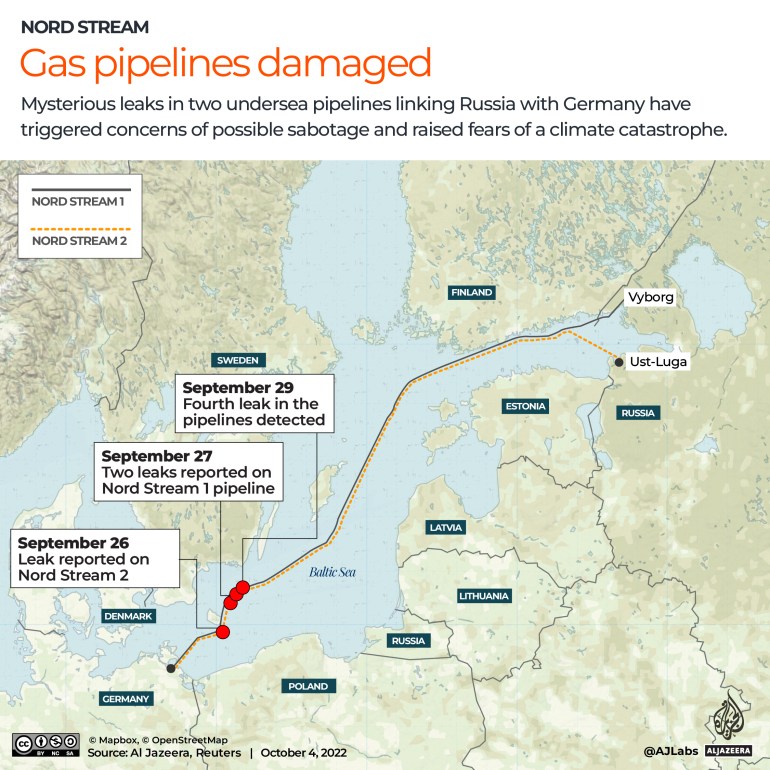

Two undersea fiber-optic cables in the Baltic Sea were severed over the weekend, prompting inquiries into the involvement of a Chinese cargo vessel currently under surveillance by the Danish navy in the Kattegat strait, which lies between Denmark and Sweden. The vessel departed from Russia’s Ust-Luga port shortly before the incidents, raising alarm among authorities.
Swedish Prime Minister Ulf Kristersson has indicated the need for a thorough investigation into the cable severance, emphasizing the seriousness of potential sabotage, a concern that has intensified following a string of similar incidents in the region over the past few years.
The Baltic Sea has emerged as a focal point for geopolitical tensions, particularly since the September 2022 explosions that damaged the Nord Stream pipelines, owned by an energy consortium that includes the Russian gas giant Gazprom. Despite extensive investigations and numerous allegations of blame bandied about, definitive accountability for the blasts has yet to be established.
The ruptured pipelines had previously supplied gas from Russia to Germany and had faced operational challenges even before the explosions, with the Nord Stream 2 pipeline never entering service due to geopolitical tensions following Russia’s military actions in Ukraine. The damage left three of the four pipeline tubes inoperable.
Recent investigative efforts have suggested that a fleet of Russian maritime vessels may have been deployed for sabotage operations in the Baltic Sea, while Russia has counter-accused Western nations, particularly the United States, of orchestrating the attacks. The discourse surrounding these incidents has only heightened since the damage in October 2023 to the Balticconnector gas pipeline, which connects Finland and Estonia, alongside data cables in the vicinity.
Geographically, the Baltic Sea presents a unique architecture that facilitates underwater maneuvers and clandestine activities. The basin features distinct chokepoints and is bordered by NATO member states, alongside proximity to Russia’s military presence in the region. As NATO capabilities have expanded to include Finland and Sweden, tensions have escalated, creating a tense backdrop for these underwater incidents.
Though experts caution that attributing sabotage motives can be complex, incidents in the area often raise alarms related to hybrid warfare tactics, which blend conventional military strategies with unconventional maneuvers designed to destabilize without overt conflict.
While speculation continues regarding the motivations behind the recent severed cables, it is noted that the reliability and redundancy of existing infrastructure within the Baltic Sea minimizes potential disruptions in communications and energy supplies. Nations in the region maintain robust systems that can reroute digital traffic, ensuring service continuity amid such challenges.
As political and social cohesion remain pivotal, experts contend that acts of sabotage—whether intentional or accidental—serve to sow anxiety and distrust among NATO allies, underlining the importance of collaborative resilience and preparedness in the face of evolving security challenges in the Baltic Sea.
#MiddleEastNews #WorldNews