
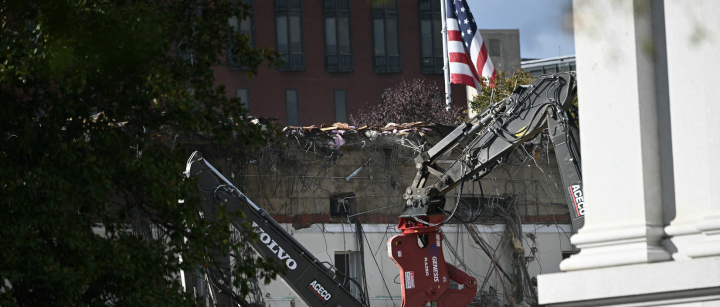

The construction of a new ballroom within the White House complex has prompted significant discussions regarding its funding and ethical implications. An expensive project—initially estimated at 0 million by the administration—has recently experienced a budget revision, setting the cost at 0 million. The Trump administration announced that this grand venue would be financed through contributions from the president and “other patriot donors,” highlighting a fundraising approach that aims to gather support from prominent figures and organizations.
On October 15, President Trump hosted a private fundraising dinner at the White House, attended by representatives from various leading companies, including Amazon, Apple, and Google, as well as affluent supporters of his presidential campaign. The event signaled a collaborative effort among private donors, as the administration had previously indicated that nearly 0 million had already been pledged towards the ballroom’s construction.
Concerns have been raised about the implications this funding model may present. Critics, including some Democratic leaders and ethics experts, have voiced skepticism about the potential influence that private donors might have on federal policy decisions. Senator Richard Blumenthal described the project as a potential “boondoggle,” suggesting that it could not only distort the architectural integrity of the White House but also compromise the impartiality of the executive office.
Experts have noted that the fundraising approach may affect public trust in governmental processes. Noah Bookbinder, president of Citizens for Responsibility and Ethics in Washington, emphasized that donor contributions tied to personal interests could blur the lines between public service and private gain. This perspective has sparked a broader discourse about the ethical responsibilities associated with the integration of private funding in government projects.
While many projects in Washington, such as the Vietnam Veterans Memorial and the Martin Luther King Memorial, have historically relied on private donations, critics argue that a ballroom solely for private events diverges from intangible public benefit principles. Such initiatives should prioritize accessibility and transparency.
In spite of these controversies, the ballroom project continues to attract interest, further emphasizing the necessity for ongoing dialogue surrounding the intersection of private contributions and public responsibility. As this significant development unfolds, the broader implications for government ethics remain a critical area for scrutiny and discussion.
#PoliticsNews #CultureNews