

In a recent address to the United Nations General Assembly on September 23, former President Donald Trump made sweeping claims regarding renewable energy, particularly targeting proponents of green energy initiatives. He asserted that these movements had brought many European countries to a precarious state, dismissing climate change as a contrived issue. Such remarks, however, lack grounding in the current realities surrounding both renewable energy and climate science.
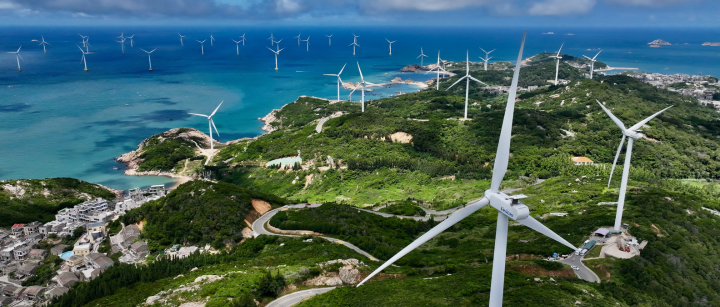
One of Trump’s more notable misstatements pertained to the status of wind energy in China. He contended that although China produces the majority of wind turbines globally, it maintains minimal wind farm installations. Contrarily, data indicates that China not only leads in wind turbine manufacturing but also in the number of operational wind farms, accounting for approximately 44% of the world’s total wind capacity and boasting the highest number of active installations globally.
Conversely, in terms of public commitment to renewable energy, Chinese President Xi Jinping reaffirmed at a U.N. climate summit that the nation would double its wind capacity within the next decade. This commitment showcases a dedication to sustainable energy growth and reflects China’s proactive role in mitigating climate change impacts.
Trump further labeled wind energy as prohibitively expensive and reliant on substantial government subsidies. While it is true that offshore wind energy has high initial costs, land-based wind energy is increasingly competitive, often equating or surpassing traditional fossil fuel sources like natural gas and coal in terms of cost, even without subsidies. Such advancements suggest a promising landscape for renewables, contrary to Trump’s portrayal.
Addressing global warming, Trump linked the increasing number of heat-related deaths in Europe to energy policy decisions, perpetuating the notion that climate change is a “hoax.” Yet, scientific consensus, supported by organizations like NASA and the World Health Organization, confirms the existence of anthropogenic climate change, noting that increased carbon emissions are leading to more severe environmental and public health crises.
Additionally, Trump confused ongoing discussions in climate science, stating that scientists had shifted terminology from “global warming” to “climate change” due to fluctuating temperatures. However, both terms coexist in scientific discourse: “climate change” encompasses broader phenomena, including rising sea levels and extreme weather patterns, while “global warming” specifically refers to the long-term rise in Earth’s average surface temperatures.
In conclusion, Trump’s assertions, when measured against the empirical evidence available, underscore the importance of informed discourse in addressing climate change. As nations, including those in the Middle East and Africa, increasingly orient their policies toward sustainability, narratives need to reflect the ongoing advancements in renewable technologies and the urgent need for collaborative international action in public health and environmental stewardship.
#PoliticsNews #EnvironmentNews