
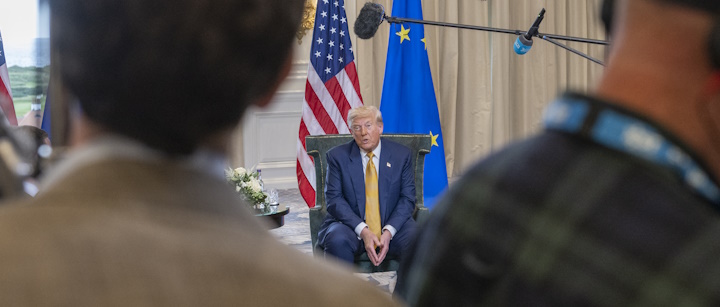

In early August, former President Donald Trump made headlines following his assertion that a recent trade deal with the European Union (EU) would yield hundreds of billions of dollars for the United States. This statement, however, diverged from the details revealed in a joint statement with the EU on August 21, where it was clarified that European companies were anticipated to invest an additional 0 billion across key sectors in the U.S. throughout Trump’s tenure—rather than an outright payment being received by the U.S. government.
The framework agreement, while fostering optimism, did not grant Trump the control over investments that he implied. Instead, the 0 billion figure represents expected contributions from various EU companies for future projects, illustrating Europe’s commitment to bolstering its economic relationship with the U.S. This partnership is often characterized by mutual investment exceeding trillion, reflecting a robust transatlantic bond that has proven beneficial in various sectors.
During a July press conference, Trump outlined the overarching terms of this trade deal, which aimed at reducing his proposed tariffs on EU imports. This move was positioned to avert escalating tariffs set to take effect in early August. Trump’s discussions emphasized reciprocal agreements where both parties would see adjusted tariffs aligned with respective commitments.
Contrarily, Trump characterized this anticipated investment from the EU as a “gift,” suggesting it was an unconditional monetary advantage for U.S. economic growth. Multiple EU documents clarified, however, that this figure is based on projected investments from European industries over several years, underlining the dynamic nature of international trade negotiations.
Discussions pertaining to Japan’s trade relationship have similarly featured exaggerated claims. Trump touted a “signing bonus” of 0 billion from Japan, asserting that this money could be leveraged at his discretion. Yet, Japanese trade representatives emphasized that this commitment relates primarily to loans and investment frameworks, rather than a unilateral cash transfer to the U.S.
Despite differing narratives from both sides, there remains a consensus on the importance of collaborative efforts in vital sectors like technology and pharmaceuticals. The ongoing dialogue surrounding these agreements indicates a mutual interest in enhancing shared economic opportunities.
As both the U.S. and EU continue to navigate the complexities of their trade dynamics, these agreements signal a positive trajectory in international economic relations, focusing on collaboration and growth across borders.
#PoliticsNews #BusinessNews