
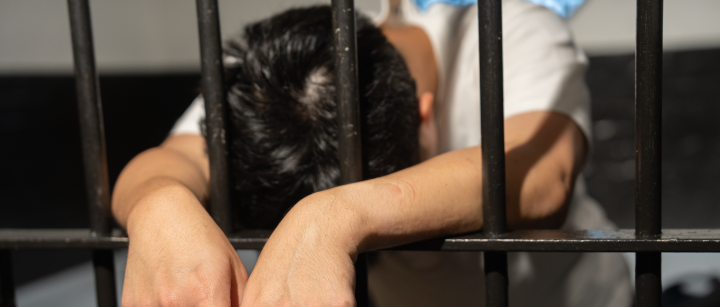

In recent discussions regarding law enforcement and bail policies, President Donald Trump has expressed strong opposition to cashless bail initiatives, labeling them as detrimental to public safety. His comments coincide with the announcement of a temporary federal oversight of law enforcement in Washington, D.C., where he implicated cashless bail as a crucial factor in rising crime rates within urban centers such as New York and Chicago.
Despite Trump’s assertions, a comprehensive review of crime data challenges the narrative that areas implementing cashless bail are experiencing disaster. Research consistently reveals that the uptick in crime rates that occurred nationally during the pandemic correlates more strongly with broader socio-economic factors rather than the absence of cash bail. For instance, recent statistics from the Chicago Police Department indicate a significant decline in overall crime, down 15% from the previous year, including a striking 37% reduction in murder rates.
In various jurisdictions that have adopted cashless bail, provisions often exist to detain individuals accused of violent felonies, ensuring that pretrial release is not granted indiscriminately. Notably, states like Illinois and New Jersey maintain judicial discretion, allowing judges to assess the risk posed by defendants before any release. As recent data illustrates, people charged with serious offenses such as murder see minimal instances of pretrial release, affirming that public safety remains a priority.
The movement toward cashless bail was ignited by advocacy groups highlighting the inequities faced by individuals unable to afford bail, fostering an environment where defendants might languish in detention solely due to economic hardship. Critics, including Trump, have described such reforms as “soft-on-crime,” yet this characterization ignores the potential for more equitable judicial processes.
The evolving landscape of bail reform is reflective of a broader conversation about justice and equity in the legal system, with many states incorporating risk assessments and alternative conditions for release instead of cash bail. Policymakers are recognizing the need for nuanced solutions that balance public safety with fair treatment within the judicial system.
Calls for reform, including Trump’s suggestion of federal legislation to override state laws, raise questions about the constitutional boundaries of such measures. Legal experts assert that Congress’s role in altering state bail policies is limited, emphasizing that bail practices fall under state jurisdiction.
In light of recent reforms, there appears to be a consensus among various studies that cashless bail, while not without its challenges, does not inherently contribute to increased crime. In fact, it may serve as a vehicle for reducing systemic inequities in the justice system.
As the dialogue around bail reform continues, it becomes increasingly evident that cooperative strategies emphasizing public safety, fair treatment, and judicial discretion offer a more constructive path forward, steering clear of the alarmist rhetoric that often dominates discussions on law enforcement and public safety.
#PoliticsNews #CultureNews