
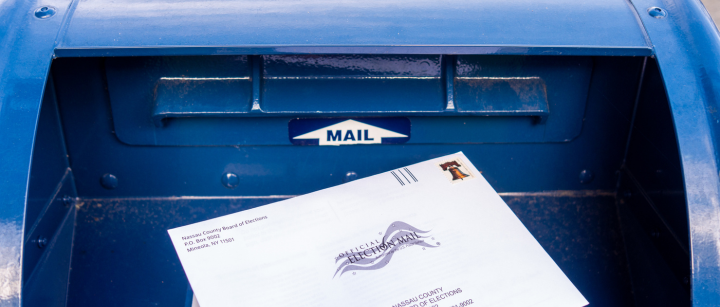

On August 18, former President Donald Trump made headlines with a renewed focus on mail-in ballots and electronic voting machines. His assertions, however, were met with substantial scrutiny and challenge from experts across the political spectrum.
In a post on Truth Social, Trump expressed his intent to lead a movement aimed at eliminating mail-in ballots and what he termed “Highly ‘Inaccurate,’ Very Expensive, and Seriously Controversial VOTING MACHINES.” He stated his administration was in the process of drafting an executive order to target these voting methods, announcing his aims during a press conference with Ukrainian President Volodymyr Zelenskyy at the White House.
Throughout the day, Trump reiterated his position, voicing familiar but unfounded claims about mail-in voting. Specifically, he incorrectly asserted that the United States was the only country utilizing this voting method, despite evidence showing that numerous countries, including Canada, Germany, and New Zealand, employ mail-in voting systems. Additionally, experts highlighted that each state holds the authority to manage its own elections independently rather than acting as agents of the federal government, as Trump suggested.
Trump’s narrative suggested widespread “MASSIVE VOTER FRAUD” linked to mail-in voting, a claim not supported by credible evidence. While some minor instances of fraud have been officially recorded, experts affirm that they are exceedingly rare and insufficient to impact election results meaningfully. Furthermore, in addressing his disparagement of voting machines, Trump called them “Highly ‘Inaccurate’ and Very Expensive.” However, election security personnel emphatically refuted this assertion, declaring the voting systems utilized in the 2020 election as the most secure in U.S. history.
Despite Trump’s ongoing narrative regarding the reliability of mail-in ballots and voting machines, a host of experts have emphasized the continuous improvements that have been made to facilitate secure and accurate elections in the United States. For instance, up to 36 states currently allow no-excuse mail-in voting, a practice considered both efficient and secure by electoral specialists.
As the political landscape evolves, particularly with the upcoming elections, discourse surrounding voting practices will undoubtedly continue to be a focal point for debate. Historically, election processes have undergone rigorous scrutiny and reform, aiming to safeguard democracy while ensuring accessibility for all voters.
The latest developments surrounding Trump’s initiatives have sparked wide-ranging discussions about election integrity and the role of various voting methods, as well as the implications of federal intervention in state-run elections.
#PoliticsNews #WorldNews