
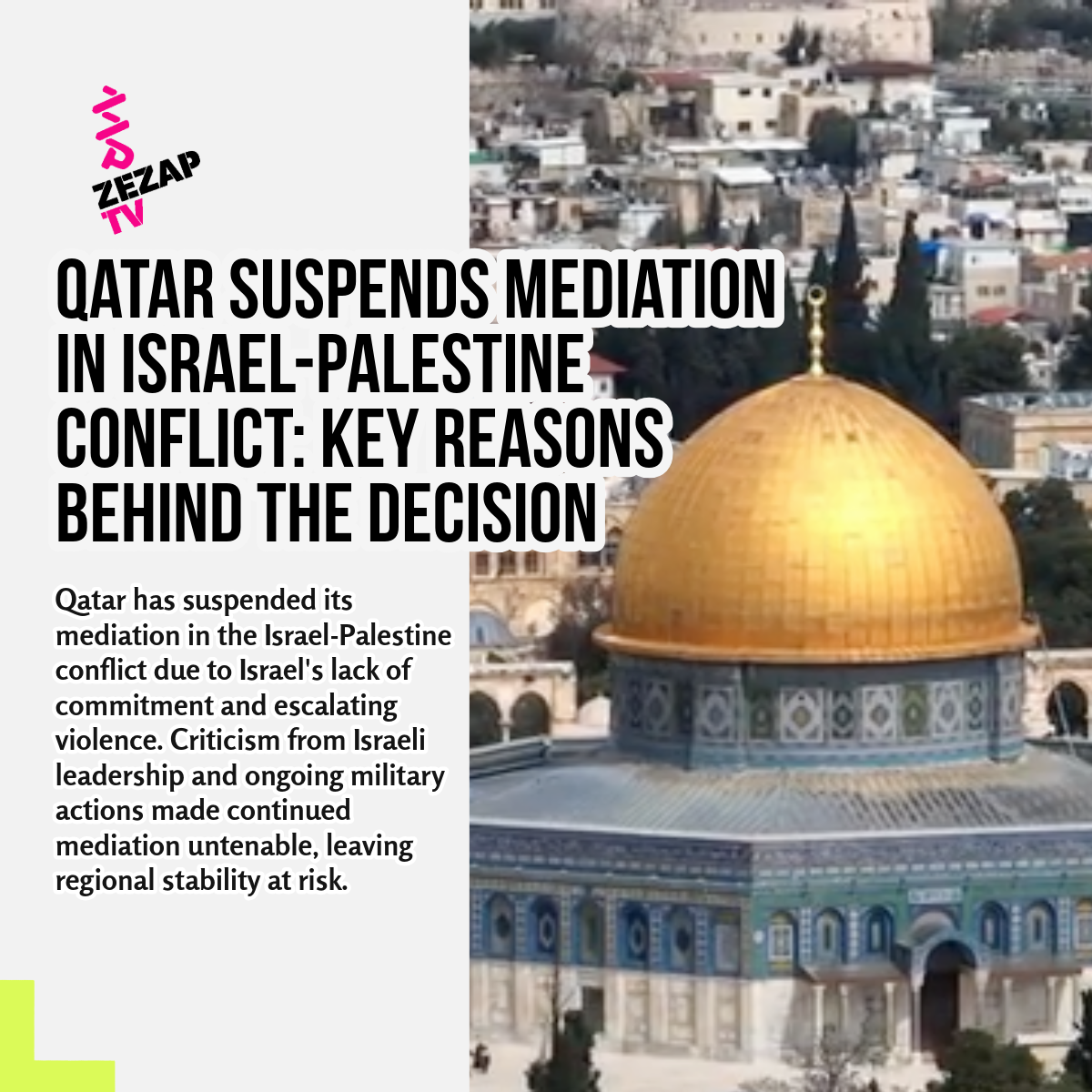

Qatar has made a significant decision to suspend its mediation role in the Israel-Palestine conflict, driven by growing frustration over the lack of commitment from both sides, particularly Israel. This Qatar mediation withdrawal is a direct result of the ongoing setbacks in the Israel-Palestine conflict, highlighting the challenges of brokering peace in such a complex situation. This decision comes after weeks of stalled diplomatic efforts, escalating violence, and renewed hostilities that have hindered hopes for peace. Qatar’s withdrawal highlights the increasing difficulty of guiding the region toward a viable resolution. Both parties’ actions continuously undermine progress, making it challenging to establish a stable foundation for peace. The absence of Qatar’s involvement raises questions about the future of diplomatic efforts in the region. It leaves a significant gap in attempts to broker dialogue between Israel and Palestine. Many believe that Qatar’s role as a mediator was crucial in keeping both sides at the negotiation table, and its exit from the process is likely to have significant repercussions on the already fragile peace process. The implications of this withdrawal are complex, potentially leading to increased instability, emboldening hardline positions, and diminishing the chances of future diplomatic interventions. This could shape the dynamics of the region for years to come, making any future attempts at peace even more challenging.
Frustration Over Stalled Peace Talks
Qatar’s Foreign Ministry spokesperson, Majed Al Ansari, confirmed that Doha has officially notified both parties of its decision, emphasizing that mediation will only resume if there is a genuine commitment to peace talks. The spokesperson reiterated that Qatar is committed to fostering dialogue, but not at the cost of continuous deadlock. The frustrations have been mounting as repeated attempts to broker peace have been met with resistance and reluctance, particularly from Israel. While Qatar, alongside Egypt and the United States, successfully brokered a brief ceasefire in November, subsequent efforts have faltered due to renewed military actions and intensifying rhetoric, particularly from Israel. The repeated breakdown of these initiatives has highlighted the challenges of maintaining any semblance of stability without full cooperation from both sides, and Qatar’s patience has evidently reached its limit. The inability to sustain even short-term agreements has underlined the fragile nature of the current situation, where trust is virtually nonexistent, and both sides seem more invested in pursuing their own agendas rather than working towards a common goal.
The lack of progress in the peace talks has had a demoralizing effect on all parties involved. Diplomatic channels that were once open have now become increasingly strained, and the hope of finding a peaceful resolution appears to be slipping away. The international community has been watching these developments closely, with many urging for renewed dialogue. However, without a mediator like Qatar, the prospects of rekindling negotiations seem bleak. The frustrations of Qatar reflect a broader sentiment shared by other regional and international actors who have grown weary of the constant setbacks and lack of tangible progress.
Netanyahu’s Criticism Undermines Peace Efforts
Further adding to Qatar’s frustrations, Israeli Prime Minister Benjamin Netanyahu publicly criticized Qatar’s mediation efforts, calling them ineffective. Qatar described these remarks as “irresponsible and destructive.” Critics argue that Netanyahu’s statements are part of a broader strategy to resist meaningful steps toward negotiation. Recent Israeli military operations, including airstrikes in Gaza and attacks on Hezbollah positions in Beirut’s southern suburbs, reflect an effort to undermine peace initiatives. These actions have widened the gap between the parties, making a resolution seem increasingly unlikely. The perception that Israel is not genuinely interested in peace has further dissuaded Qatar from continuing its involvement, as Doha believes that mediation efforts cannot succeed in an environment where one party is actively seeking to escalate tensions rather than resolve them.
The open criticism from Netanyahu has not only strained relations with Qatar but has also created a ripple effect that undermines broader diplomatic efforts. Such public condemnation sends a message that dialogue and negotiation are not valued, further entrenching positions on both sides. Qatar’s decision to step back from its role as mediator can be seen as a direct consequence of these tensions, where trust and mutual respect have been eroded to the point of making productive discussions impossible. The broader implications of Netanyahu’s criticism extend beyond Qatar and raise concerns about the credibility of any future mediation attempts.
Recent military actions have only added fuel to the fire. The intensification of military operations, including airstrikes targeting Gaza and attacks on Hezbollah positions, has created an atmosphere of hostility that leaves little room for diplomacy. The deliberate targeting and escalation are seen by many as part of a broader strategy to prevent any meaningful progress toward a truce. For Qatar, continuing to mediate under such circumstances became untenable, as it became clear that one side was not genuinely interested in pursuing peace. This perception has been echoed by other international observers, who have pointed out that the lack of sincere engagement by Israel has made any mediation efforts virtually impossible.
A Ceasefire Appears Out of Reach
Despite persistent calls from the international community, Israel’s leadership remains opposed to any form of ceasefire, with Netanyahu equating a truce to conceding to Hamas. This stance has led to further military escalations, heightening instability in an already fragile region. Observers suggest that this hardline stance reveals a deeper unwillingness on Israel’s part to engage in peace negotiations—one of the main reasons behind Qatar’s decision to withdraw. The situation on the ground has deteriorated, with frequent clashes and airstrikes that further complicate the prospects for peace. This reluctance to engage in ceasefire discussions has not only alienated Qatar but has also drawn criticism from other international actors, who see Israel’s refusal as a major obstacle to achieving even a temporary halt in hostilities.
The continued military operations have led to a dire humanitarian situation, particularly for Palestinian civilians. The inability to secure a ceasefire means that the civilian population is caught in the crossfire, with limited access to essential services such as food, water, and medical care. The situation has reached a point where international humanitarian organizations are raising alarms over the worsening crisis. The absence of a ceasefire also means that there is no opportunity for humanitarian aid to reach those in need, further exacerbating the suffering of the people in Gaza and the West Bank. Qatar’s decision to suspend its mediation efforts can be seen as a reflection of the futility of attempting to negotiate under these circumstances, where one side is not even willing to consider the basic step of halting violence.
The implications of Israel’s hardline stance extend beyond the immediate conflict. By refusing to engage in ceasefire discussions, Israel is effectively signaling that it is unwilling to make any concessions, no matter how small. This has led to increased tensions not only with the Palestinians but also with other regional actors who have been advocating for de-escalation. The refusal to consider a ceasefire has left the region on edge, with the potential for further escalations that could draw in neighboring countries and lead to a broader conflict. The international community has been vocal in its calls for restraint, but without any willingness from Israel to engage, these calls have largely fallen on deaf ears.
Impact on Regional Stability
Qatar’s decision to suspend its mediation role is a significant setback for diplomatic efforts aimed at de-escalating the conflict. Without Doha’s role as a neutral intermediary, the chances of finding common ground between the conflicting sides seem slim. Analysts warn that Israel’s uncompromising stance, combined with Qatar’s withdrawal from negotiations, could escalate tensions and destabilize the wider region. The absence of a mediator has left a vacuum that may be filled by actors with vested interests, potentially exacerbating the conflict. The lack of diplomatic oversight increases the risk of miscalculations and unintended escalations, which could have far-reaching consequences for regional stability.
The impact of Qatar’s withdrawal extends beyond the immediate conflict between Israel and Palestine. The absence of a trusted mediator means that there is no channel for dialogue, leaving both sides without a way to communicate effectively. This breakdown in communication increases the risk of misunderstandings and miscalculations, which could lead to unintended escalations. The region is already fraught with tension, and the absence of a mediator like Qatar only adds to the instability. Neighboring countries are also concerned about the potential spillover effects, as the conflict shows no signs of de-escalation.
The vacuum left by Qatar’s exit could also be exploited by external actors with their own agendas. Regional powers with vested interests in the outcome of the conflict may step in to fill the gap left by Qatar, potentially complicating the situation further. These actors may not have the same commitment to neutrality that Qatar had, and their involvement could lead to a further escalation of hostilities. The risk of proxy conflicts and increased interference by external powers is a significant concern, as it could lead to an even more complex and intractable situation. The lack of a credible mediator also means that the international community will have to work harder to find an alternative way to bring both sides back to the negotiating table.
As Qatar steps back, the path to peace appears more elusive than ever. Palestinian civilians continue to bear the brunt of the violence, facing disproportionate suffering and hardship, with no clear resolution in sight. The humanitarian crisis in Gaza and the West Bank is worsening, with limited access to essential services and continued military operations further eroding living conditions. The lack of a mediator has left civilians with little hope for respite, as the violence shows no signs of abating. Whether either party will show renewed commitment to negotiations remains uncertain. Until then, the region’s prospects for stability hang in the balance. The international community is left to grapple with the consequences of Qatar’s exit, and the urgent need for renewed diplomatic engagement has never been more apparent. The situation demands a concerted effort from all stakeholders to prevent a complete collapse of any remaining hope for peace and stability in the region.