
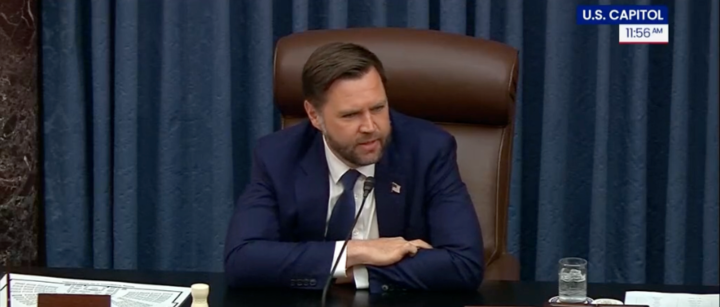

As the forthcoming Republican budget bill, known as the One Big Beautiful Bill Act, approaches the deadline set by the White House for July 4, lawmakers are intensifying their discourse around the legislation. This bill brings forth divergent perspectives from both Republicans and Democrats, prompting a detailed examination of its projected implications.
Republican Senator Markwayne Mullin has claimed that the average household of four is expected to see an increase of over ,000 in annual take-home pay as a direct result of this legislation. President Donald Trump echoed this sentiment with a projection of at least ,000 more in earnings. However, these estimates appear to be on the optimistic side, largely anchored in projections for economic growth produced by the White House’s Council of Economic Advisers.
Conversely, Trump inaccurately asserted that the bill would leave Medicaid untouched. In reality, this bill proposes substantial reductions in Medicaid spending alongside new eligibility criteria, actions projected to affect millions currently availing of this critical health coverage. The Congressional Budget Office (CBO) anticipates that approximately 11.8 million individuals might find themselves without health insurance by 2034 due to these changes, a sentiment echoed by both supporters and critics of the legislation.
Debate also surrounds the bill’s potential impact on the federal deficit, with Democratic commentators warning of an expected increase of at least .3 trillion. The White House, however, remains optimistic, claiming that the bill could actually shrink the deficit by .4 trillion. This discrepancy hinges on the interpretation of the 2017 tax cuts’ role in the overall economic equation.
On the front of social welfare, Democrats have alleged that the bill facilitates tax relief primarily for the wealthiest Americans, while Republicans advocate that it delivers significant benefits to working and middle-class families. Independent analyses suggest that while several taxpayer groups may receive reductions in tax liability, indications also show that those in higher income brackets would ultimately gain more.
In remarks on potential tax implications stemming from Social Security benefits, Trump has suggested that the bill would abolish taxes here entirely. However, while fewer seniors might pay taxes on these benefits under the legislation, over 7 million higher-income seniors would still be subject to these taxes, indicating nuanced ramifications for different income groups.
As discussions around energy policy evolve in light of this bill, the White House has purported that it could lead to lower costs of living for all Americans. Yet, some experts have contended that the measures within the legislation could inadvertently increase average annual household energy expenses, raising concerns regarding its broader impacts on various sectors.
In conclusion, as the One Big Beautiful Bill Act makes its way back to the House for further deliberations, both sides of the aisle are poised to continue arguing their positions amidst an atmosphere of potential economic transformation. The ongoing conversation highlights key issues surrounding social welfare, tax liabilities, and the implications of energy policies in the contemporary American landscape.
#PoliticsNews #WorldNews